
Voting Rights Act was meant to unify, but the result has been division
By Charles Mitchell
In 1965, Congress decided it was time to end the insidious practice, mostly in the South, of making sure Black people were never in the majority in any voting district. These districts included for county supervisor, school board, city council, state legislature or, in states where judges are elected, any court district.
Two provisions in the act were the engines. One said any state with a history of racial gerrymandering had to submit any proposed change in anything related to voting (including moving a polling place) to the U.S. Justice Department Division of Civil Rights for “pre-clearance.” The second provision banned “illegally diluting minority voting strength.” States are required to revisit voting districts periodically, so leaving lines as they were was not an option. New plans had to meet federal approval.
Wording of the second provision is crucial. The U.S. Constitution leaves just about everything relating to voting to state or local management and control. Even back in the 1960s, Congress knew it would be unconstitutional to order states, counties, cities and any other authority creating voting districts to make sure Black voters had majorities in districts proportional to their population.
However, line-drawers in the targeted states took the not-so-subtle hint created by the term “illegal dilution,” and knew what they had to do to receive Justice Department approval. Redistricting plans were rejected unless submitted with appropriate Black-majority districts. Federal courts consistently backed the Justice Department.
The act achieved its nominal purpose. Starting in the late 1970s, Black people were elected to public offices in significant numbers for the first time since Jim Crow gained traction post-Reconstruction.
The act, however, did not achieve its idealistic purpose – assuming part of the idea was to foster at least a little harmony through creating racially mixed governing boards and legislatures. There are several reasons for the failure, but two dominate. First, a Black parent elected to a school board gets a seat and a voice, but a voice that can still be ignored if the white board members, still in the majority, see things differently.
The other down side – the big one – has been the creation of racially safe districts. A core tenet of the mixed bag of humanity that constitutes America is that we have many different heritages, faiths and cultures but politically we are one. Everybody matters. We talk, and we decide based on what’s just, fair and best for as many people as possible. Yet inclusive conversations proved to be rare. Further, it became commonplace for people actually to label districts by race. History has shown that a Black person elected in a Black-majority district can be re-elected time and again and never has to tip his or her hat to white voters. And exactly the same is true for whites elected in white majority districts. There is rarely any cross-talk on issues, especially issues related to race, no attempt to see another perspective, and certainly no “coming together.” For the most part, only whites seek election to “white seats” and only Blacks seek election to “Black seats.” During the Jim Crow years and before, we lived in an unjust nation. Today, we live in a nation still seeking justice, but more racially polarized than ever.
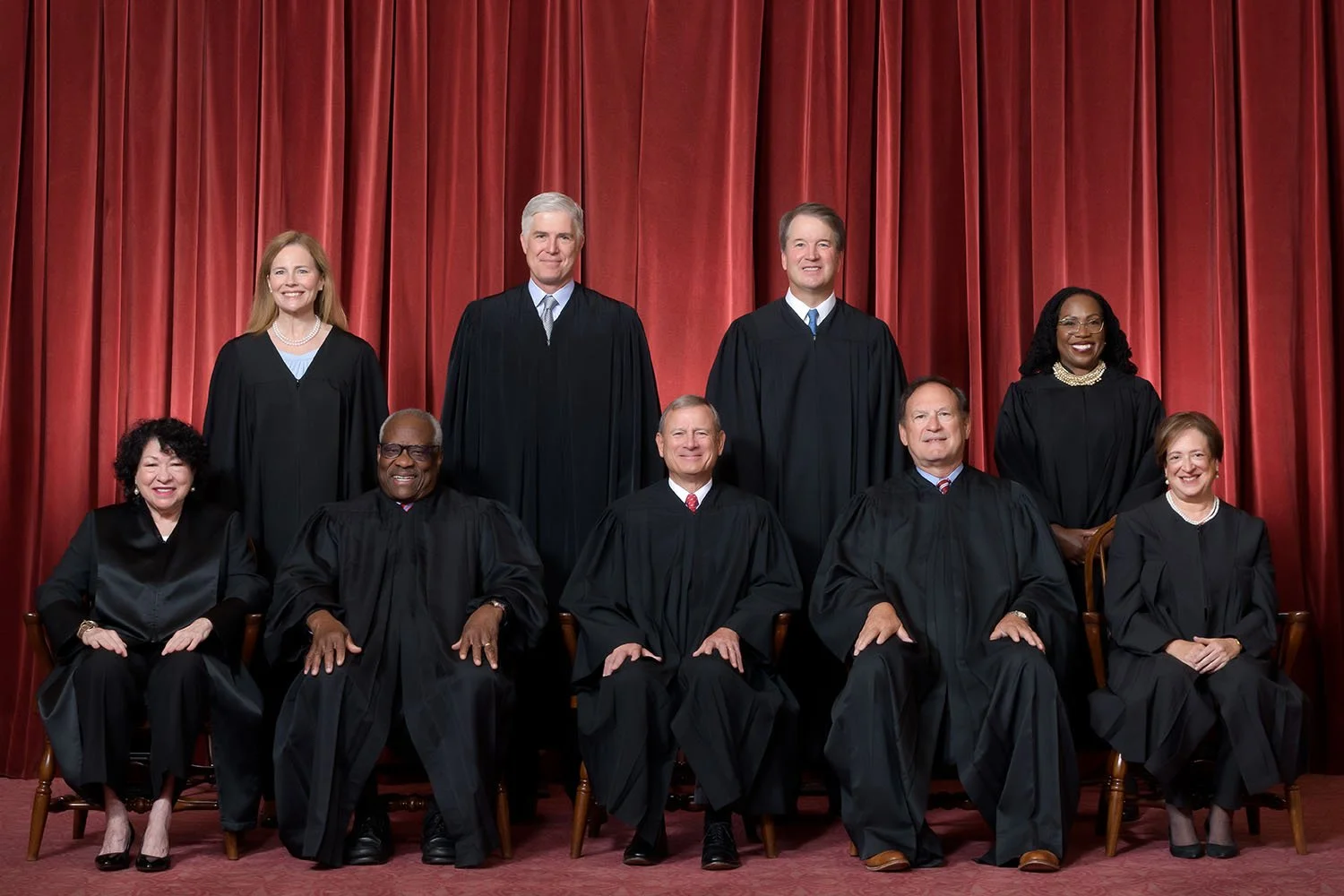
The Supreme Court’s decision in Louisiana v. Callais may be constitutionally sound but next-to-impossible to apply.
Perhaps it gives them too much credit, but the Supreme Court decision in Louisiana v. Callais – perhaps the biggest case this year – apparently seeks to encourage conversation, perhaps even a dose of racial unity.
In a 6-3 vote, the Court said that by intentionally drawing lines to create a second Black majority U.S. House district, Louisiana had engaged head-on in racial discrimination.
Call it semantics if you will, but this is the situation: The Constitution doesn’t allow purposeful splitting of minority voting strength, and it doesn’t allow purposeful creation of districts to create racial majorities.
At this point, it’s okay to do as many have done. Which is to pause and say, “Hmm, how in the world can both tenets be accomplished?” Truth is, no one knows. The Callais decision may be constitutionally sound, yet next-to-impossible to apply.
A takeaway could be that the court majority saw that creating racially safe districts has resulted not in unity, as intended, but in division that has manifested in myriad ways, including white flight from cities. Witness the number of communities with all Black officials or all white officials.
When the Callais decision was published, Black leaders and scholars said the Voting Rights Act had been “gutted,” indicating the South would revert to the practice of making sure no electoral district had a Black majority. Although many white leaders and scholars did exult in the decision and have made no secret that they intend to get rid of Black majority districts, that’s not likely. Nothing in the Supreme Court decision indicated the court will allow a reversion to pre-1965 white supremacy tactics.
Instead, the conundrum today, as it has been through the decades and in multiple contexts, is how to use legal means to end discrimination without engaging in discrimination. Congress thought they had it figured out in 1965, but they underestimated the deep social divide that continues today. People can end prejudice, if they choose to. It’s still a bridge too far for lawmakers.
——————————————————————————
Charles Mitchell is an associate professor in the School of Journalism and New Media at the University of Mississippi and a member of the Overby Center panel of experts.
