
Supreme Court: Voting can be stacked by political party, but not by race
By Charles Mitchell
The Voting Rights Act of 1965 included provisions to use racial discrimination to fight racial discrimination.
There was no choice, really.
During that time, officials in states in the South with large Black populations consistently and purposely drew voting maps to prevent the election of Black members of city councils, boards of supervisors, school boards, judges, state legislators and delegates to the U.S. House of Representatives. They did this to make sure no district had a majority Black population. It worked. Whites held almost every office at every level.
The U.S. Constitution assigns election matters to the states, and it appeared nothing could be done to end the reality that about a third of citizens in the South could and would never by elected to anything. At the insistence of Dr. Martin Luther King Jr., President Lyndon Johnson pressured Congress artfully to override the states. The Voting Rights Act was immediately challenged as unconstitutional, but in 1966 in the case of South Carolina v. Katzenbach, the Supreme Court ruled 8-1 that the federal government had the power to intervene where states were engaged in racial discrimination. It worked. For decades, Mississippi has had more Black officeholders than any other state.
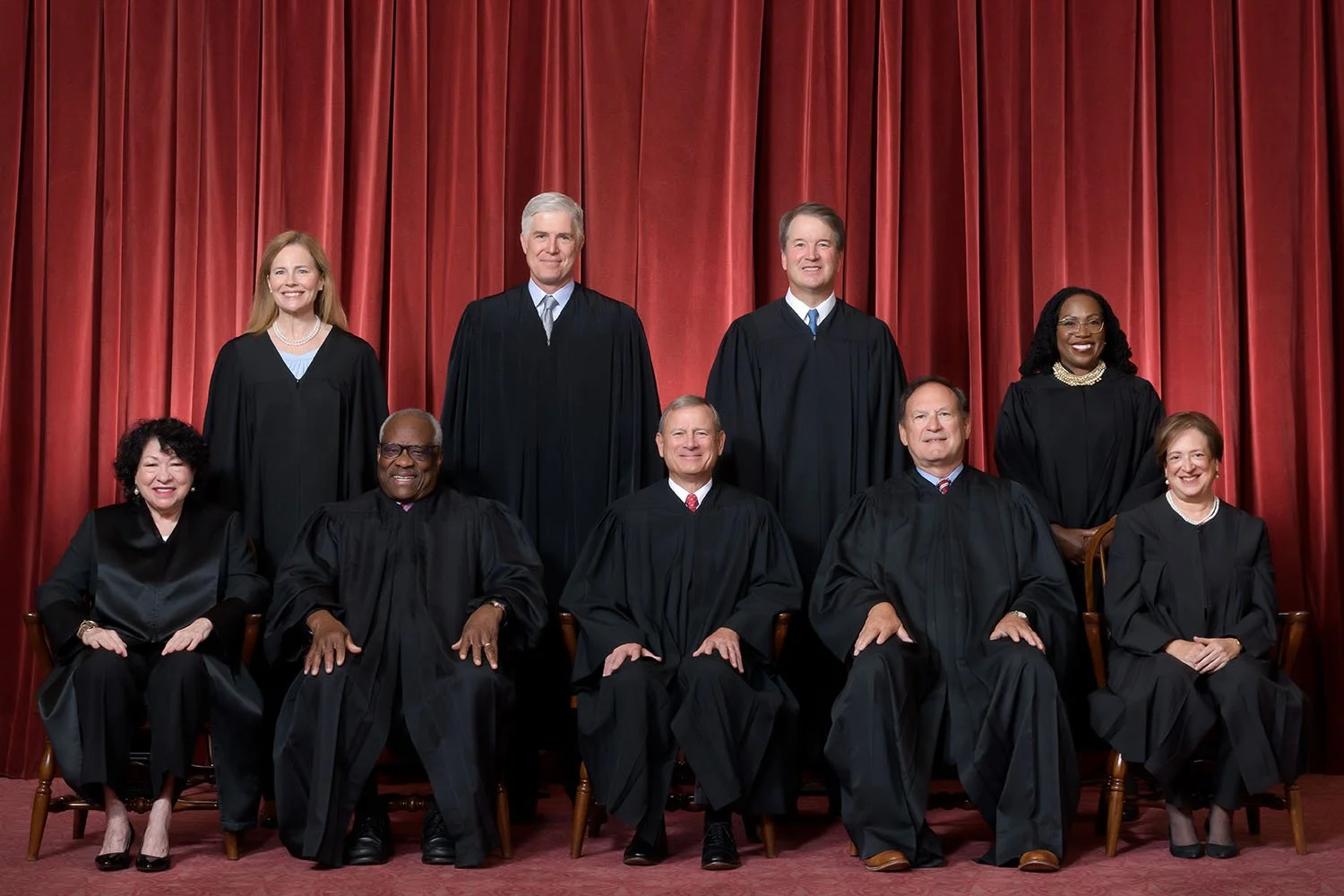
The 6-3 majority in Louisiana v. Callais says the Voting Rights Act is being tweaked; the minority says it’s being gutted.
Sixty years have passed, and in a 6-3 decision the Supreme Court ruled this week in Louisiana v. Callais that Louisiana discriminated against white people by creating a Black majority district. Critics, including the three justices who dissented, say the Voting Rights Act was gutted. The majority said it was tweaked.
The ruling came as a bunch of states – not all of them in the South – have been engaged in remapping, not specifically for racial reasons, but to favor one political party over the other. Earlier this year, the Supreme Court said that may not be smart, but it’s okay for Democrats to favor themselves where they have a majority or Republicans to do the same.
While the world salivates over the latest revelation about the late Jeffrey Epstein’s partners in crime and whether bombing Iran was a smart move, mapmakers in many states are in a rush to create more districts “safe” for one party or the other. It’s exactly the same tactic used in the South from Reconstruction until 1965 except it’s based on ideology, not skin pigmentation and, of course, it ignores the long-established fact that Black voters vote overwhelmingly (87 percent for Biden in 2020 and 83 percent for Harris in 2024) for Democrats.
Why the rush to redistrict? Because midterm elections in November will decide which party controls the U.S. House and Senate. Republicans now lead the House with 217 Republicans, 212 Democrats, one Independent and five vacant seats. Republicans also lead the Senate with 53 seats to 45 Democrats and two Independents (who usually side with Democrats).
Great power comes with holding the majority including leadership of the chamber, appointment of committee chairs and setting the agenda. Perhaps more intently than ever, Democrats want to displace enough Republicans for one central purpose: Stop Trump because of his radical excesses. Conversely, Republicans are desperate to keep their majorities so Democrats can’t enact their – you guessed it – radical excesses.
Texas, the largest of the solidly red states, started with a hurried-up redistricting last year. The idea, not masked in any way, was to use voting history and technology to cobble together more defined areas where people tend to vote Republican. The effect was to shift from 25 Republican districts and 13 Democratic districts to a 30-8 split.
Not to be outdone, California, the largest of the solidly blue states, countered with a new map designed to greatly favor the Democratic Party. Virginia is trying to do the same for Democrats and Florida Gov. Ron DeSantis says the Sunshine State will make adjustments to favor Republicans.
This balkanization of American voting districts is, in a word, not good. Democracy thrives when ideas compete and the better ones take root. There is no competition when districts are locked for one party or the other. Elections become coronations, not forums where people with diverse views even matter at all. Power politics matters. Decisions are made without discussion.
Most members of the Supreme Court clearly believe that the Voting Rights Act of 1965 did what it needed to do by giving a disenfranchised minority at least the opportunity to be heard. They think it’s time to move on. Maybe they’re right, but if they don’t think that allowing states to solidify as red or blue is just as harmful, they’re wrong.
——————————————————————————
Charles Mitchell is an associate professor in the School of Journalism and New Media at the University of Mississippi and a member of the Overby Center panel of experts.
