
Deification of César Chávez must cease, but remaking history can get tricky
By Carlos Sanchez
It has been more than a month now since The New York Times revealed a horrific side of Hispanic civil rights icon César Chávez: that he had a history of sexually predatory behavior including preying on children.
There is no doubt that the deification of Chávez to future generations must stop and his status as one of the most influential Mexican Americans in U.S. history must be tempered by this horrific aspect of his personality.
Tempered but not erased.
There is also no doubt that once she dies, the beatification must begin of 96-year-old Dolores Huerta, who co-founded the United Farmworkers and was victimized by Chávez’s predatory behavior, bearing two of his children from unwanted sex but staying quiet for decades because, as she said, “No person is greater than the movement.”
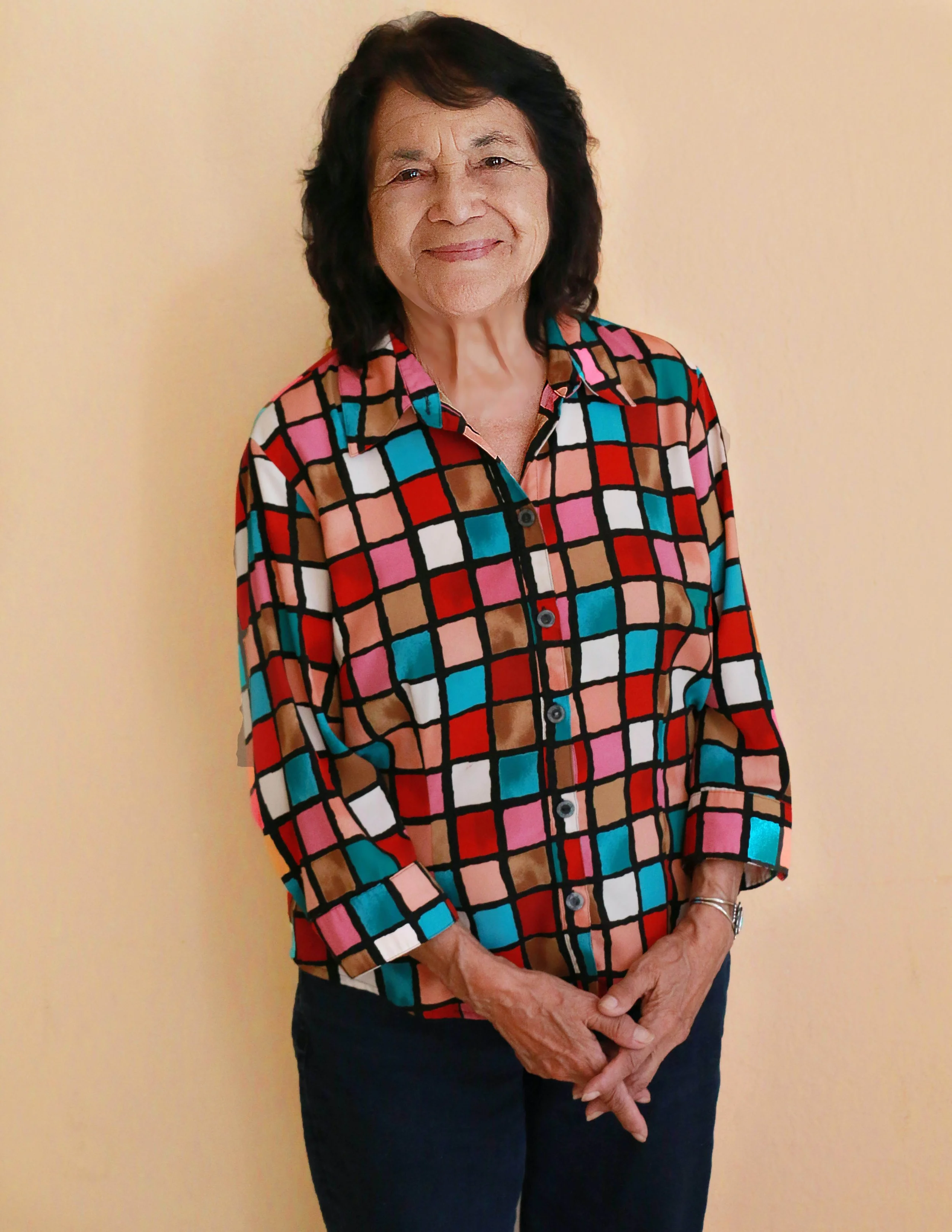
Dolores Huerta was victimized by César Chávez and had two children by him. Photo from Shutterstock.
But the implications of erasing Chávez from a prominent place in U.S. history extends beyond this evil side of the man. Before the news of his predatory behavior broke, Chávez was the most widely recognized Hispanic in the country, garnering five state holidays plus official state recognition in two other states. Huerta ranks second with three official state recognitions.
Chávez died in 1993. Schools, streets and other public places in typically predominantly Hispanic neighborhoods all carry the Chávez name much the way Martin Luther King’s name adorns public streets and neighborhoods in Black communities throughout the country.
And, yes, the Chávez name should be removed and changed to other Hispanic leaders, notably Huerta herself.
But this is where remaking history becomes tricky. The speed at which Democratic Gov. Gavin Newsom, of California, and Republican Gov. Greg Abbott, of Texas, cancelled their state’s respective holidays honoring Chávez was astounding – within days of The New York Times report.
In the case of Texas, in particular, the speed at which Abbott cancelled official Chávez celebrations proved nettlesome when just one year earlier Abbott said nothing publicly about President Trump’s decision to revert the name of the state’s largest military installation to Fort Hood from Fort Cavazos.
While neither Cavazos nor Hood was involved in any of the type of controversy that embroiled Chávez, the idea of replacing Cavazos, the nation’s first Hispanic four-star general, with Col. Robert B. Hood, who won a distinguished service medal in World War I, was considered a slap in the face to many in the Hispanic community.
The Cavazos name had replaced that of John Bell Hood, a Confederate general who many had argued had committed treason when he fought for the states that seceded from the United States. The argument was strong enough to convince Congress to codify that no military installation should honor Confederates, so Trump found a loophole in honoring a colonel that few people had ever heard of but who had the same last name as the Confederate general.
And for those arguing for an apples-to-apples comparison, we need only turn to the third president of the United States and the 1997 revelation that Thomas Jefferson had several children with one of his slaves, Sally Hemings. Few can argue that this relationship did not begin as a rape for she had no say in the matter. Yet one of the most prominent historical monuments in Washington, D.C. remains the Jefferson Memorial.
History always demands re-evaluation, and the teaching of history demands constant change as new scholarship emerges. Upon his death, I supported the movement to enshrine Chávez as a civil rights hero, and I was suspicious of those who opposed various states’ movements to honor him with a holiday just as I was suspicious of those who opposed making MLK Day a national holiday.
I was particularly proud that my eldest son would later share the same birthday as César Chávez, believing it gave me an ideal opportunity to share the Chávez legacy with another generation of Hispanics.
That’s what makes the revelations of Chávez’s predatory behavior so disturbing on multiple levels. The #metoo movement in this country helped seal quick denunciations of the Chávez legacy in light of the revelations. But it competes with the DEI movement that ostensibly seems to want to preserve Anglo accomplishments at the expense of historical blemishes of Anglo people and compare the historical achievements of people of color as a component of “wokeness.”
The Chávez legacy – both positive and negative – must not be erased, but used as a teaching tool. His most prominent victim, Huerta, would argue that progress was made by the UFW on behalf of Hispanic laborers.
But the deification of Chávez, the result of having so few nationally recognized Hispanics, must cease.
The renaming of public monuments actually poses an opportunity. Names such a Dr. Héctor P. Garcia, founder of the American G.I. Forum; or civil rights activists José Ángel Gutiérrez or Rudolfo “Corky” González, not to mention Huerta herself; or voting rights activists Willie Velásquez, should all be potential candidates. And these are prominent Mexican American historical figures, which doesn’t include Cuban Americans, Puerto Ricans or Hispanics from other countries.
And if the general public doesn’t recognize these names, then so much the better. The opportunity to educate the American society on so many important but oft-forgotten historical figures is but one way we can benefit from rethinking the tarnished legacy of César Chávez.
——————————————————
Carlos Sanchez is a freelance writer based in McAllen, Texas. He is a member of the Overby Center panel of experts.