
Pentagon’s media policy a serious impediment to the free flow of information
By Charles Mitchell
During the fighting in Afghanistan and Iraq, journalists of all stripes were openly invited to “embed” with America’s military forces in the region. The only stipulations were that the journalists would pay their own cost of transportation to and from the war zones and would not be given weapons. Otherwise, in-country meals, transportation, housing and medical costs would be provided.
A question is why would the military do this? How is this part of the mission? The answer follows, transcribed directly from a Pentagon directive (emphasis added):
“The Department of Defense policy on media coverage of future military operations is that media will have long-term, minimally restrictive access to U.S. air, ground and naval forces through embedding. Media coverage of any future operation will, to a large extent, shape public perception of the national security environment now and in the years ahead. This holds true for the U.S. public; the public in allied countries whose opinion can affect the durability of our coalition; and publics in countries where we conduct operations, whose perceptions of us can affect the cost and duration of our involvement.
“Our ultimate strategic success in bringing peace and security to this region will come in our long-term commitment to supporting our democratic ideals. We need to tell the factual story — good or bad — before others seed the media with disinformation and distortions, as they most certainly will continue to do. Our people in the field need to tell our story — only commanders can ensure the media get to the story alongside the troops. We must organize for and facilitate access of national and international media to our forces, including those forces engaged in ground operations, with the goal of doing so right from the start. To accomplish this, we will embed media with our units. These embedded media will live, work and travel as part of the units with which they are embedded to facilitate maximum, in-depth coverage of U.S. forces in combat and related operations. Commanders and public affairs officers must work together to balance the need for media access with the need for operational security.”
So, the next question is what has changed? If the military recognized that telling both the good and bad factually was a foundationally critical to American values and success, why is that no longer true?
The answer of course is that the secretary of defense (or secretary of war if you prefer), believes it’s his job to decide who can report Pentagon news and to assure that it is always favorable. Pete Hegseth, under the very thin veil of “security” and with the vocal approval of President Donald Trump, has revoked the media credentials of any journalist who failed to sign on to his new terms: “Information must be approved for public release by an appropriate authorizing official before it is released by any military member, civilian employee or contract employee, even if it is unclassified."
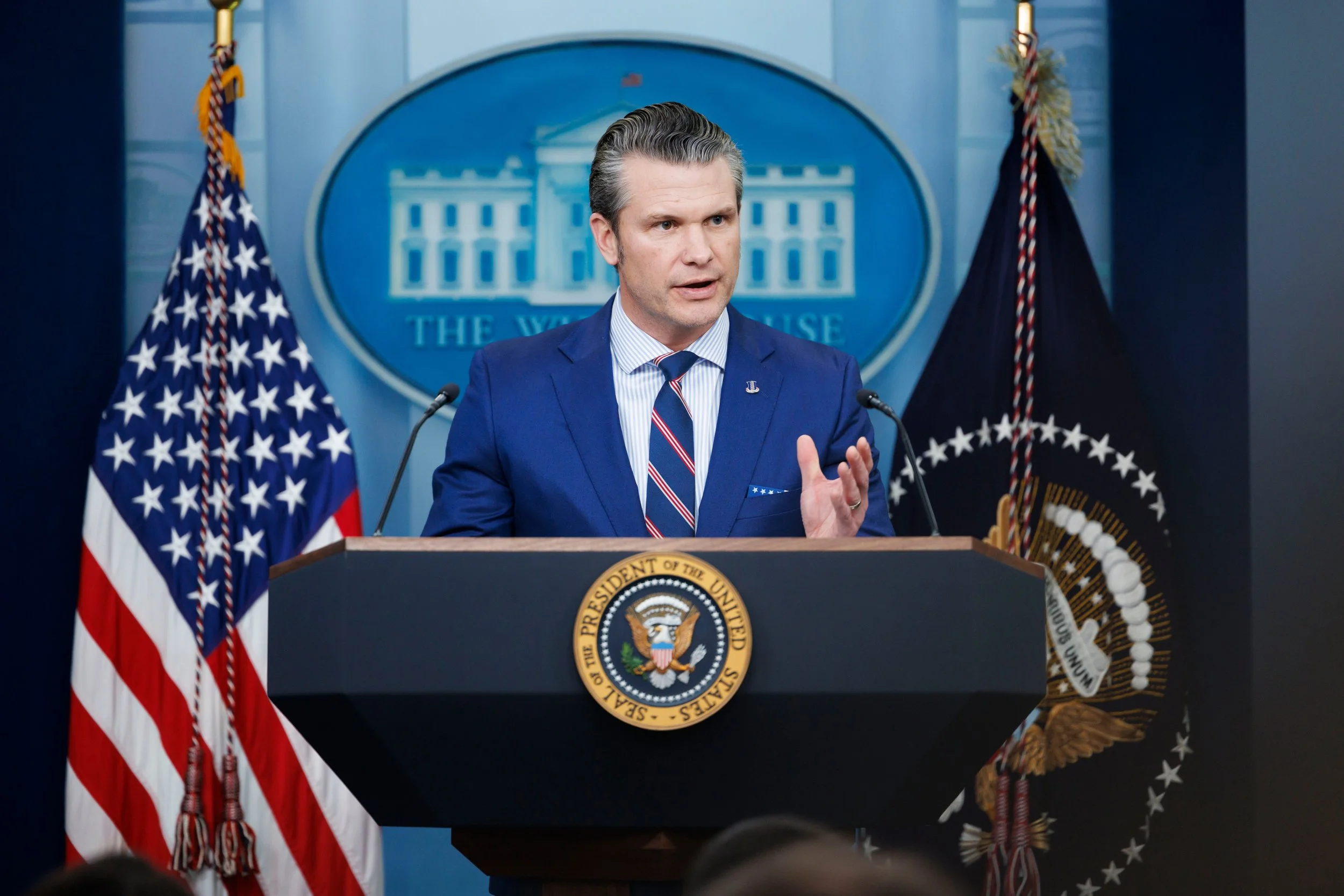
Pete Hegseth issues new media policy for the Pentagon. Photo from Shutterstock.
Hegseth was a personality on Fox News before being nominated by Trump to lead the Defense Department. In a contentious confirmation process, questions were raised about sexual misconduct, his management ability and alcohol use. He was confirmed on a 50-50 vote in the Senate, with Vice President J.D. Vance breaking the tie.
Credible journalists, veterans of accurate reporting through multiple administrations, responded to Hegseth’s demands by turning in their passes and hitting the nearest exit. Most pledged to keep doing what they’ve always done. One, Tony Bertuca of Inside Defense told CNN, “The defense beat is all about following the money. With a $1 trillion budget? They can’t hide. And I’m not going to stop doing my job.”
The departing professionals are being replaced by people who will report the way the administration desires. In addition to the other restrictions, they’ve agreed to have “minders” escort then in the Pentagon. And, by the way, Pentagon workers have tacitly been told their jobs are on the line if unfavorable news comes out.
There has never been any love lost between mission-focused military people and snoopy news people asking snoopy questions. Certainly, commanders would prefer friendly fire deaths or mistargeted missiles not be reported. And the brass had to be outraged, for instance, when the world was told about the heinous abuse of prisoners at Abu Ghraib during the Iraq War in 2004. Focusing on what went right in any enterprise is far more enjoyable than having a light shined when something goes wrong. Similarly, there’s no doubt that the military must have secrets to be operationally effective. Not everything is or should be public information.
Hegseth, however, not only chose to try to intimidate the media and Pentagon employees. He signed a separate memo ordering that no Defense Department personnel anywhere converse with any member of Congress or any state official without advance permission. So, a fleet admiral who gets a call from a U.S. senator about the lunch menu on an aircraft carrier must get Hegseth’s permission before answering?
Importantly, no crisis or incident that posed any public danger or emergency led to the memos. No secrets got out. The trigger was a quest to control what people can know by doing away with objective journalism.
Back to basics: The only reason that America even has troops and weapons is to protect American freedom. Until this secretary of defense took the reins, the military itself recognized that being accountable was not optional. As the Pentagon itself put it just a few years ago: “Our ultimate strategic success in bringing peace and security to this region will come in our long-term commitment to supporting our democratic ideals.”
The United States needs to remain a place where the military answers to the people and journalists aren’t cherry-picked to do an administration’s bidding. There are plenty of places in the world today where that’s how things are already done Hegseth’s way – North Korea, China, Russia and Iran to name a few. It is a rogue’s gallery of authoritarian countries. With Hegseth’s plan, serious damage is being done to the First Amendment and the free flow of information.
—————————————————————————————————-
Charles Mitchell is an associate professor in the School of Journalism and New Media at the University of Mississippi and a member of the Overby Center panel of experts.