
Bob Lewis: veteran journalist and the current state of journalism
By Ahmer Anwar Khan
(Editor’s note: This interview was conducted on October 3rd, 2025 and has been edited for clarity and brevity.)
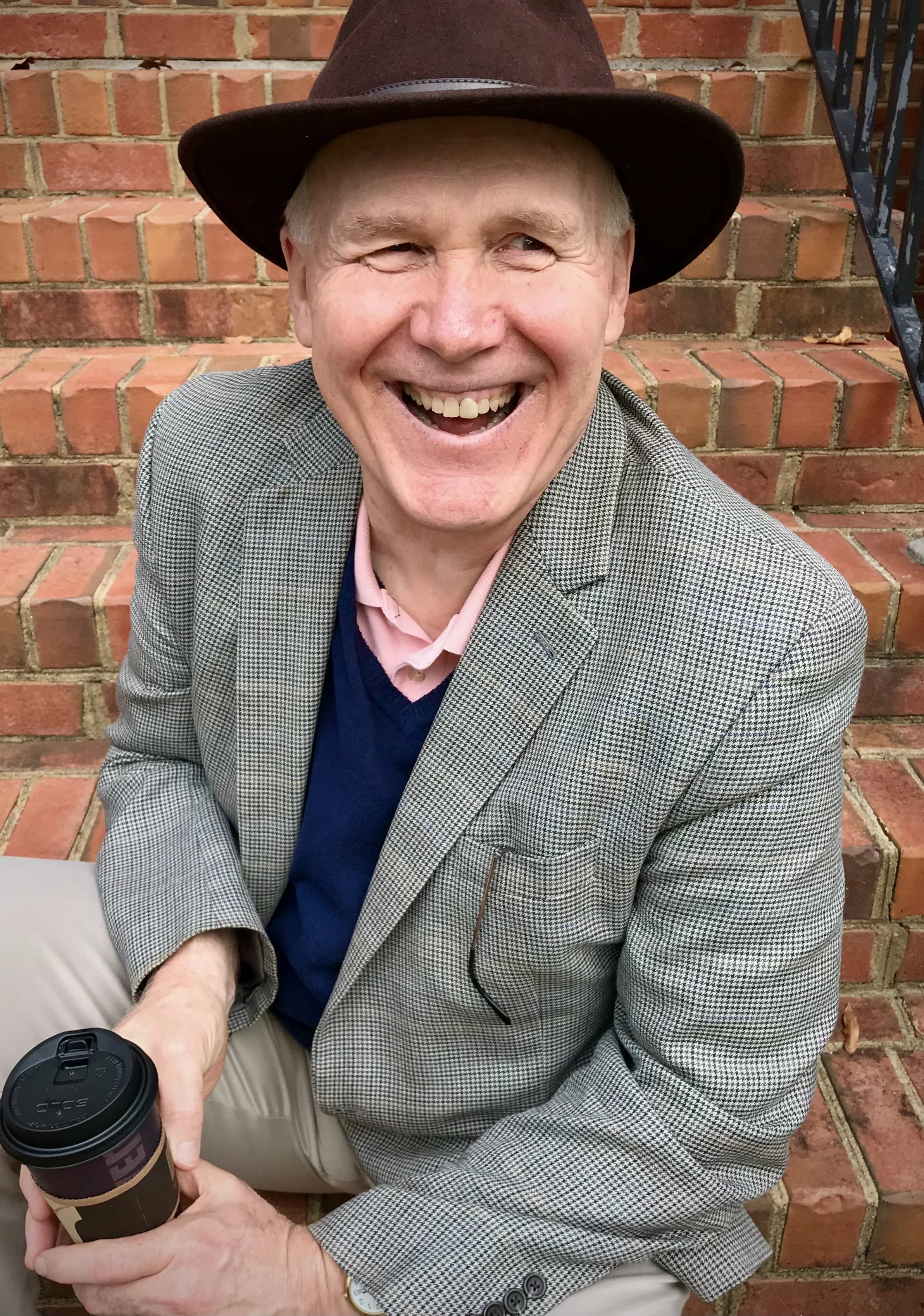
Bob Lewis worked in the U.S. news and communications industry for almost 50 years. He is a native of Tennessee who earned his B.A. degree in journalism in 1978 from the University of Mississippi where he also played varsity football. He edited a small weekly newspaper in the Mississippi Delta and held reporting and editing roles at dailies in Mississippi and Tennessee before he began a 30-year career with The Associated Press where he held positions in Ohio, Indiana, Kentucky and as news editor and political writer in Virginia. Lewis worked for six years directing public relations for McGuireWoods, an international law firm. Now retired, he and his wife, Julie, live in Richmond, Virginia, where he has been a contributing columnist for The Virginia Mercury since 2019. He has two grown sons and two grandchildren.
In an exclusive Q&A with the Overby Center for Southern Journalism and Politics, James E. “Jim” Prince III shares his insights on ensuring journalistic integrity, the relationship between advertisers and news outlets, and the current state of journalism.
Q1: Mr. Lewis, thank you for meeting with the Overby Center. Since you are now retired, let’s start by looking back at your professional career. What were some of the biggest challenges you faced in the newsroom, and how did you address them?
A: I spent most of my career with the Associated Press, and the biggest challenge was always the pressure of deadlines. We were essentially the internet before there was an internet. News wasn’t measured in cycles anymore — it was measured in minutes, sometimes seconds. There was a tremendous pressure to break stories first, to confirm them quickly, and to get them out ahead of the competition. At times, that pressure could be numbing, but it taught me the importance of accuracy under stress.
Q2: Today, some journalists argue that objectivity is outdated and unnecessary. Was objectivity important during your time, and what do you think about this shift in mindset?
A: I think those people are wrong. The decline of objectivity is one of the reasons journalism’s public standing is so low today. I came of age when journalism helped bring down a corrupt presidency. Now, it (journalism) often feels voiceless because people don’t trust it anymore. Objectivity doesn’t mean giving both sides equal weight. It means reporting facts fairly and clearly. If a driver runs a red light and hits a pedestrian, there aren’t “two sides” to that story — you report what happened. Watergate, for example, was reported objectively, and that’s what gave it power. Objectivity means being patient, learning what you don’t know, and ensuring you’ve heard every valid perspective before publishing.
Q3: Many news outlets today hire journalists based on their social media following or popularity. What’s your view on this trend of “influencer journalism”?
A: If you hire influencers instead of journalists, that’s exactly what you’ll get — influencers, not journalists. But don’t expect the public to see it as journalism. That strategy may bring clicks, but it won’t bring credibility or sustainability. The ad-supported model that once fueled traditional media is already broken. Real journalism requires credibility, not popularity.
Q4: The relationship between advertisers and news outlets has changed dramatically. How did you balance business pressures with journalistic integrity?
A: If your journalism is solid, the advertising will follow — though not at the levels we saw in the 1970s when newspapers dominated. Today, people will still pay for quality content. Publications like The Wall Street Journal survive because they deliver credible, valuable information that professionals rely on. That said, advertisers can exert pressure. I once ran a letter to the editor that criticized a prominent local figure, and our advertising dried up almost overnight. But I didn’t apologize for printing it. Journalism must never be dictated by advertisers’ opinions.
Q5: Artificial intelligence is rapidly entering the newsroom. How do you see AI affecting journalism?
A: Frankly, I don’t trust it. I’m turning 70 this year, and I don’t believe a machine can replace a reporter’s instincts. AI can’t look a source in the eye, assess their honesty, or feel the moral weight of a story. It doesn’t know the difference between truth and falsehood. I read about AI-generated papers with fake citations and fabricated sources — it’s dangerous. There’s no conscience in AI. It only gives you what you ask for, whether or not it’s true. Once journalists start relying on it blindly, we risk losing the core values that define our profession.
Q6: What do you think journalism schools should emphasize in their teaching today? Are there skills you believe are missing from current curricula?
A: I don’t know if it’s about adding or removing things, but journalism should always support a broad liberal arts education. Students should learn history, languages, art, science — the broader your knowledge, the better your reporting. Writing labs and theory classes have their place, but nothing replaces understanding the world around you. Teach students to write clearly, concisely, and under pressure. I’d rather take an English or history major and teach them journalism than the other way around. Journalism is about curiosity and clarity, not just memorizing theories.
Q7: Out of all your years as a journalist, what accomplishment or moment are you most proud of?
A: There are many moments that affected me deeply. The Virginia Tech massacre in 2007 was one of them. I was stationed in the governor’s office as updates came in, and I had to report the rising death toll in real time. It was emotionally devastating — I remember pulling over on my way home and breaking down. Another unforgettable moment was election night in 2008, when AP called Virginia for Barack Obama — the first time a Democrat had won the state in 44 years. I was the political reporter analyzing the votes, and when I said, “Call it,” the next thing I knew, the headline flashed: AP calls election for Barack Obama. It gave me goosebumps. That was history in the making, and it’s something I’ll never forget.
Q8: Finally, what advice would you give to aspiring journalists entering the field today?
A: Remember that journalism isn’t about being popular or going viral. It’s about seeking the truth — patiently, objectively, and with integrity. Mistakes happen, but deception is unforgivable. Journalism is a calling, not a shortcut to fame. If you treat it with respect, it will reward you in ways no algorithm ever can.
—————————————————————-
Ahmer Anwar Khan is working as a graduate Assistant at the Overby Center. Ahmer is pursuing an LL.M. in Air and Space Law and a master’s in Journalism at the University of Mississippi, where he serves as a Graduate Assistant at the Overby Center. Holding a law degree from the University of London, he combines his legal expertise and storytelling skills to bridge law and journalism, promoting justice and informed public discourse.