
FCC’s chair hints at steering licensure down a treacherous path
By Charles Mitchell
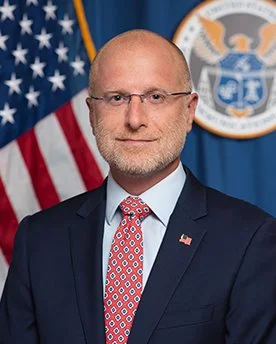
FCC Chairman Brendan Carr has made threats to news organizations over coverage.
Editor’s note: On March 25, the jury in this case found Meta and the video streaming service YouTube harmed the plaintiff, a young user, with design features that were addictive and led to her mental health distress. Actual damages totaling $3 million were awarded.
For generations, people didn’t know or really care who chaired the five-member Federal Communications Commission. Brendan Carr, chair since January 2025, is changing that – and not for the better. He’s gaining attention for his comments on government control of broadcast content, and he needs to be reminded that the worst places on this planet are where governments control what people can see, hear and say.
Since last fall, and especially since the attack on Iran began, Carr has tried to muscle American broadcasters into backing the Trump administration or at least not being critical. The president, whose dislike of major media is well-known, has been egging Carr on. They pin their positions to a plea for accuracy, but favoritism is their real aim.
At the root of Carr’s ill-founded quest is, strange as it may seem, physics. The First Amendment freedom to communicate without government management applies to print and even to the internet. The First Amendment does not apply to radio and television, at least not the same way. That’s because broadcasters use the natural and invisible broadcast spectrum, which is a public asset.
To be of any use, transmissions must be sent into the spectrum at certain wavelengths and, in turn, received by devices tuned to those wavelengths, also called frequencies. Without someone making assignments, the spectrum would be like a convention hall with thousands of people talking and all trying to understand each other at the same time. It just would not work.
A century ago, as practical use of the spectrum was developing, the federal government was the obvious choice to do the job of allocating spectrum space in the United States. To do this, the Federal Communications Commission was created by Congress in 1934 as a quasi-government agency similar to the Postal Service. The job of the FCC has been to create and enforce a licensing process keyed to functionality.
Importantly, Congress also recognized the spectrum, like air, cannot be owned by any government or by any private enterprise. Because broadcasters use the public asset, the FCC was empowered to require them to provide programming in the public’s interest. That simple proposition is what Carr is twisting into a pretzel. He’s conflating “public interest” into “supporting the administration” to a degree never imagined by the FCC. His statements have been condemned by every former FCC chair still living.
A distinction should be made between the major legacy networks that have major news operations and evening newscasts – CBS, NBC and ABC – and cable news channels. The legacy networks use the limited spectrum and are licensed by the FCC. Cable news operations such as Fox News, CNN and MSNBC are not licensed by the FCC because they are available only through cable and do not use the spectrum. However, the FCC licenses local stations, including those owned by Fox, that may carry some news from the cable networks. The ire of conservatives has for decades been aimed at the legacy networks for what is perceived as a liberal bias.
Carr’s first rumble came in September 2025 after reaction to the assassination of Christian crusader Charlie Kirk was mocked by TV host Jimmy Kimmell. Carr directly said airing such comments could be the basis for broadcast license review. Kimmell was briefly taken off the air after broadcast companies refused to air his show.
On March 14, a more animated Carr weighed in on social media, taking issue with some of the reporting regarding Iran. He wrote, “Broadcasters that are running hoaxes and news distortions - also known as the fake news - have a chance now to correct course before their license renewals come up. The law is clear. Broadcasters must operate in the public interest, and they will lose their licenses if they do not.”
The public interest standard has never meant non-partisan or even accurate. Instead, local licensees have been held to be useful and relevant. Regulators have stayed in their lane. Even when the late radio talk host Rush Limbaugh routinely broadcast that America was “under siege” and ranted about “feminazis” during the Barack Obama administration, there was no hint from the FCC that radio stations were putting their licenses in jeopardy by airing the Limbaugh show.
By bringing any hint of politics into the work of the FCC, Carr is betraying 100 years of the agency functioning well and above politics as it was carefully designed to do. For the public, the good news is that there are five commissioners and Carr’s vote and opinion carry no more weight than the other four. Another plus is that although Carr has been appointed by Trump and narrowly confirmed twice, FCC commission terms are five years. Perhaps he will be gone by the time his view of appropriate broadcast standards gains any ground.
Everybody knows political tides change frequently in the United States. Sometimes conservatives have the power. Sometimes liberals do. It’s in the interest of both to avoid having an FCC that doesn’t issue or renew licenses based on ideology. It’s not clear why the present FCC chairman doesn’t appear to agree.
————————————————————————
Charles Mitchell is an associate professor in the School of Journalism and New Media at the University of Mississippi and a member of the Overby Center panel of experts.
