
By Tony Pederson
In an election-night interview with The New York Times as the votes began to show a Democratic sweep, President Donald Trump tried to blame turnout, saying that Republicans couldn’t get the vote out because he wasn’t on the ballot. But he was a part of the vote in every state where he had barnstormed in the two weeks before the midterm and, especially, where he had put his brand forward in supporting poor candidates.
Make no mistake. The midterm elections were a major, shocking surprise in favor of Democrats. Nationally and in numerous historically red states, Democrats won stunning victories in Senate races and House districts. Many Democratic wins occurred in states and districts where Trump had won by double digits in 2024. The polling before the elections failed to capture the depth of Democratic sentiment and, more importantly, the widespread frustration of the American people.
The scope of the Democratic wave was shown by Senate wins in Kansas, South Carolina, and Iowa, among others. Adam Hamilton, pastor of the largest United Methodist Church in the United States, defeated Trump favorite and incumbent Roger Marshall and will be the first Democrat from Kansas elected to the Senate since 1932. Iowa state Rep. Josh Turek won in a state that hasn’t elected a Democratic senator since 2008 and where Trump won by 13 percentage points in 2024. Darline Graham, appointed to finish her brother Lindsey Graham’s term after his unexpected death in July and endorsed by Trump, lost to relative newcomer Annie Andrews, a pediatrician. Trump won South Carolina by 18 percentage points in 2024.
As this is written, Senate votes in Alaska are still being counted as well as in Mississippi, where perhaps the most historic of the midterm results may occur. Will Colom, a Democratic district attorney, holds a small lead over incumbent Sen. Cindy Hyde-Smith. National Democrats provided only small financial support for Colom, making the results even more surprising. Were he to prevail, Colom would be the first Black from Mississippi in the U.S. Senate since Reconstruction. A legal challenge is possible regardless of which candidate is declared the winner.

James Talarico is a Texas state representative and U.S. Democratic Senator-elect.
One need look no further than Texas as a study on why the Democrats took control of both houses of Congress as well as pulling off shocking victories in state races. Scandal-plagued Texas Attorney General Ken Paxton was one of those poor candidates backed by Trump in a losing and expensive race for the Senate won by state Rep. James Talarico by 12 percentage points. Even more stunning, Democrats won governor, lieutenant governor and attorney general races. The last time a Democrat won statewide in Texas was 1994.
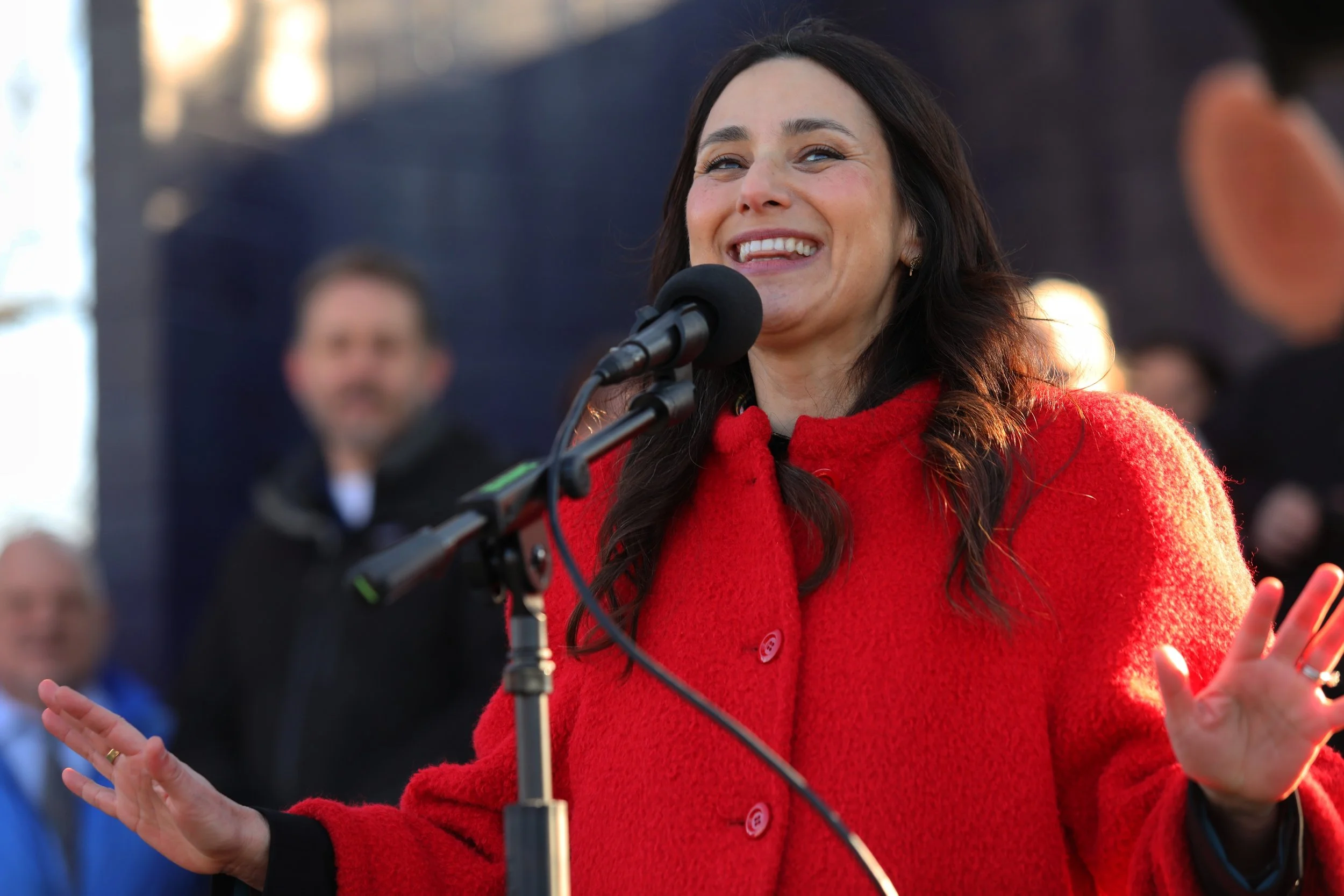
Gina Hinojosa is a Texas state representative and Democratic Govenor-elect.
Texas Gov. Greg Abbott was running for an unprecedented fourth term but was beaten by state Rep. Gina Hinojosa by seven percentage points. Lt. Gov. Dan Patrick, holding one of the most powerful offices in the state for 12 years, was defeated by state Rep. Vikki Goodwin by six percentage points. To their credit, both conceded. Patrick said in a statement that the election was “fair and square.” Whatever temptation Trump may have had to challenge the results vanished with the size and scope of GOP losses.
Patrick has been closely identified with MAGA and has been the elected official most responsible for pushing the far-right agenda in Texas. His efforts resulted in abortion restrictions and the state aggressively limiting access to certain books in public school libraries. The Texas Legislature also enacted limits on diversity, equity and inclusion policies in public universities and placed restrictions on race and diversity topics in the classroom.
The parts of the state that turned solidly Democratic are deep South Texas in the Rio Grande Valley and far West Texas around El Paso and the Big Bend Country. The state is 40% Hispanic, heavily concentrated in those areas. Polling in the spring indicated Trump’s Hispanic support was slipping badly. Final data from the voting will no doubt show Hispanics contributing significantly to the Democratic sweep. Gov.-elect Hinojosa is from McAllen, deep in the Rio Grande Valley. She’s a graduate of UT-Austin and holds a law degree from George Washington University. Expect her to be a rising star on the national scene.
Trump’s main problem with the electorate was his handling of the economy. The massive midterm exit poll by SSRS with The Associated Press and major broadcast network partners showed that 39% of those interviewed said the economy was the No. 1 issue; 32% listed the state of democracy.
Several polls also pointed to corruption as an issue with Trump himself as well as his family profiting from cryptocurrency and various business arrangements that have traditionally been considered off limits for presidents.
Aside from any survey, Americans understand how much it costs to fill gasoline tanks with an average cost of $4.16 a gallon nationwide. They know how much regular trips to the grocery store cost. Frustration only seemed to mount in the days before the election as Trump seemed to cast aside those concerns, telling his rally audiences that the economy was in great shape.
The inflation of the past two years has been fueled by Trump’s tariffs as well as his war on Iran, launched in February. Trump said the war in Iran would end within weeks, but it has continued without resolution or any specific explanation from Trump as to the goal of the war or the end game.
The White House seemed taken aback when Iran closed off the Strait of Hormuz, severely limiting shipping and having a dramatic effect of fuel prices. Shipping through the strait remains extremely limited.
Both political parties face a challenge for change in the next two years. Republicans will have to move past Trump; Democrats will have to moderate the rising influence of those in the progressive wing and especially those who identify as Democratic Socialists. Neither will be easy. Democrats will also have to focus on governing in the next two years and avoid what will be a serious temptation for endless investigations and even another attempt at impeaching Trump.
Republicans could do well to remember some of the reasons Trump rose to power and won two elections in the first place. Trump first announced his candidacy for president in July 2015 in what was widely regarded as a pointless and quixotic campaign. He was best known as a businessman and reality television personality. Yet he spoke to a segment of the American electorate that felt frustrated and left out by the American political process. Trump and Republicans claimed influence over the working class that had been held by Democrats for generations.
Whatever success Trump had seemed wasted in the first two years of his second term. Trump spent time and political capital on his ballroom, renovating the Lincoln Memorial Reflecting Pool, golf course redesign, a Trump arch, and trying to inject the federal government into state elections. He also tried, without success, to have numerous former officials he regards as enemies indicted. He also mandated midterm redistricting in red states, including in Texas, in order to protect Congressional seats. He seemed dismissive of inflation and any pain being endured by the American people. On the day after the midterm election, his first availability with the media was in the construction area of his new ballroom where he touted the need for it and the benefits of the completed facility.
Vice President JD Vance issued a statement blaming the election losses on the war with Iran. It’s difficult to know whether he believes that or if he is trying to separate himself from Trump and rehabilitate his image for a presidential run in two years. The campaign for 2028 has started, and Vance will have an uphill climb in establishing a credible candidacy.
Many questions remain as to how the Democrats will govern. The transitions could be difficult in many places, including Texas. In its election editorial, The Dallas Morning News cautioned that Democrats will have to govern a state that remains solidly conservative. The same could be said for the new Democrats in Congress. Whatever the election outcome, we are a nation of centrists. We are people who just want government to work, which hasn’t been the case in recent years.
Perhaps one of the most dangerous things Donald Trump has done is to challenge the integrity of U.S. elections including his false claim that the 2020 election was stolen. The mob attack on the Capitol on Jan. 6, 2021, was the result. For now, the success of the midterms is that democracy has prevailed. We may or may not like them, but changes are coming.
——————————————————————
Tony Pederson is managing fellow of the Overby Center for Southern Journalism and Politics and professor emeritus in journalism at Southern Methodist University in Dallas.
