
Q&A with James E. “Jim” Prince III
By Ahmer Khan
Editor’s note: This interview was conducted on April 20, 2025 and has been edited for clarity and brevity
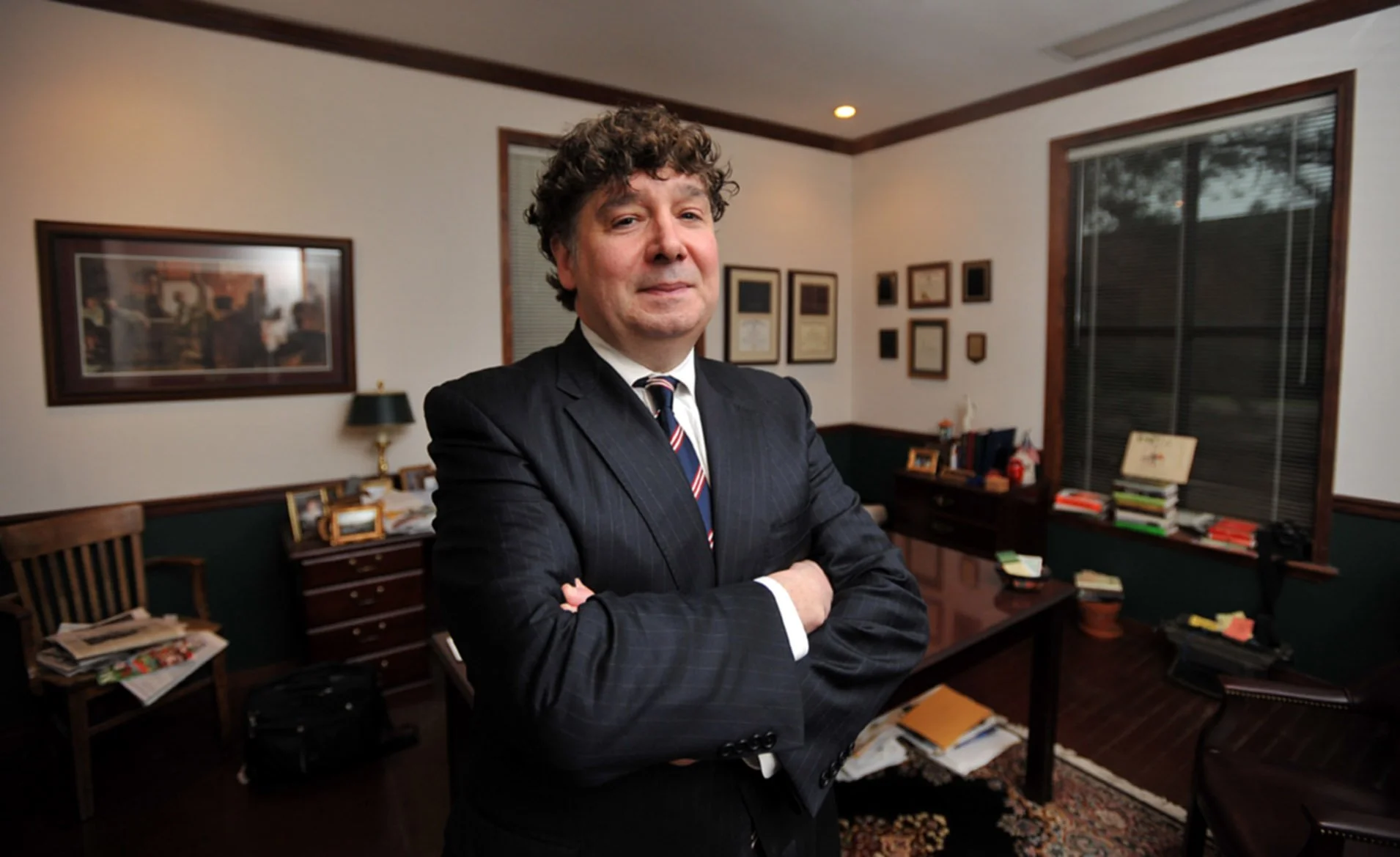
James E. “Jim” Prince III is president of Prince Media Group, a legacy print magazine and newspaper company with roots dating back to 1881 and a more modern digital marketing firm founded in 2015. Prince publishes The Neshoba Democrat and Neshoba Magazine in Philadelphia and the Madison County Journal along with Madison County Magazine in Madison County.
A Philadelphia, Miss., native and fifth-generation Mississippian, Prince began his newspaper career while in high school, working summers at The Neshoba Democrat until he graduated from college. He was a two-term editor of The Reflector at Mississippi State University. He is a former staff reporter at The Tampa (Fla.) Tribune. He has held news management and reporting positions in Selma and Brewton, Ala. He was news editor of The Commonwealth in Greenwood before moving to Madison County in 1992 to purchase the Journal. He bought The Neshoba Democrat in August 2000 and lives in Philadelphia and Ridgeland.
He holds an undergraduate degree in business administration from Mississippi State University and a master’s degree in journalism from the University of Mississippi.
In 1991, he received the top writing award given by The Associated Press for his coverage of a fire that swept a city block in Greenwood. Prince newspapers have been judged consistently by the Mississippi Press Association as among the state’s best. Prince has received numerous first-place MPA awards for his own work in photography, layout, reporting and editorial writing. He is a two-time winner of the MPA’s top editorial writing award.
He has served two terms as President of the Mississippi Press Association. His hobbies include mountain biking, reading and cooking. He has been a Rotarian for three decades and is a member of The First Presbyterian Church of Jackson, where he serves as a deacon.
In an exclusive Q&A with the Overby Center for Southern Journalism and Politics, James E. “Jim” Prince III shares his insights on the future of journalism, the evolving relationship of advertising and news, and ensuring objectivity.
Q1: What do you see as the primary challenges your news organization is facing right now? How are you addressing them?
A: Finding people for our newsrooms is increasingly difficult. Hiring has become complex. For years, we were able to hire a number of Ole Miss students, but in recent times many of them seem less focused on accuracy and more on pushing an agenda. We value traditional reporting, who, what, where, when, and how. That’s becoming harder to find. Objectivity is very difficult these days, but it remains our priority.
Q2: You mentioned objectivity. How important is it for your organization, and how do you ensure it?
A: It’s everything. Our reputation depends on it. Of course, no one is completely without bias, but we stress fairness and accuracy. Reporters may not please everyone, but if the work is fair, it will be respected. I had a man once tell me, “I don’t always like what you write, but you’re fair.” That’s the goal. We train our reporters to record interviews, verify quotes, and paraphrase carefully if unsure. Accuracy and fairness are non-negotiable.
Q3: Do you have guidelines for how your staff should use social media, both personally and professionally?
A: Yes. We encourage social media use for finding stories and engaging with the community, but we discourage posting opinions or commenting on issues they cover. That blurs the line. As publisher, I write editorials, so I have an opinion, but reporters need to remain neutral. It’s an unwritten rule, but we monitor it closely.
Q4: Advertising and news have traditionally been separate. How do you see that relationship evolving today?
A: I’m old school. We always kept a hard wall between advertising and news. But the business model has changed. We now sometimes hire people with both marketing and journalism skills, like IMC graduates, to handle social media or promotional work for local businesses. However, they never write news about those businesses. We clearly label advertising and business reviews. The key is transparency, keeping lines clear while finding ways to sustain the newsroom.
Q5: What about artificial intelligence? How is it affecting your work?
A: We love AI as a tool, especially in marketing. It helps our ad reps write emails, summarize data, and streamline communication. It’s not ready to replace reporters, but it can assist in drafting editorials or analyzing information, much like having an assistant. Of course, AI can “hallucinate,” so you have to watch it closely. Used wisely, it’s an asset.
Q6: From your perspective, what should journalism schools be teaching that they aren’t right now?
A: Common sense and the basics, how to find the courthouse, how to read city council minutes, and how to report the who, what, where, when, and how. Too many students dream of being on CNN or Fox, but they lack grounding in local reporting. Curiosity is also key. We need more reporters asking questions for the sake of truth, not pushing an agenda.
Q7: Finally, what accomplishment of your organization are you most proud of?
A: Recently, we helped a local veteran struggling with the VA. He had reached out to everyone up to the president but couldn’t get help. We published his story, made calls, and he finally received the care he needed. That’s the power of local journalism. We also enjoy producing what we call “happy news,” like our daily paper for the Neshoba County Fair filled with photos, features, and community stories. People love seeing their families and neighbors in print. Of course, we also cover hard news, but striking a balance is important, like a good breakfast.