
Serving, and singing, in the Black gospel tradition may be patriotism of the highest order
Editor’s note: This is one in a series of essays by the Overby Center for Southern Journalism and Politics marking the 250th anniversary of the founding of the United States of America.
By Robert F. Darden
As we enter our country’s year-long anniversary celebrations, I’ve been taking a deeper dive in the complex relationship between 4th of July-styled patriotism and Black gospel music.
Even while working within a genre of music created as a vehicle for Christian evangelism, gospel artists have actually always recorded and performed patriotic songs.
Gospel artists – including CeCe Winans, Kirk Franklin, Yolanda Adams and Jennifer Hudson – have sung “The Star-Spangled Banner” before a host of major American sporting events, including the Super Bowl. Winans, a native of Detroit, gave a powerful and highly praised version of the anthem last Thanksgiving Day before the Detroit Lions and Green Bay Packers played at Ford Field.
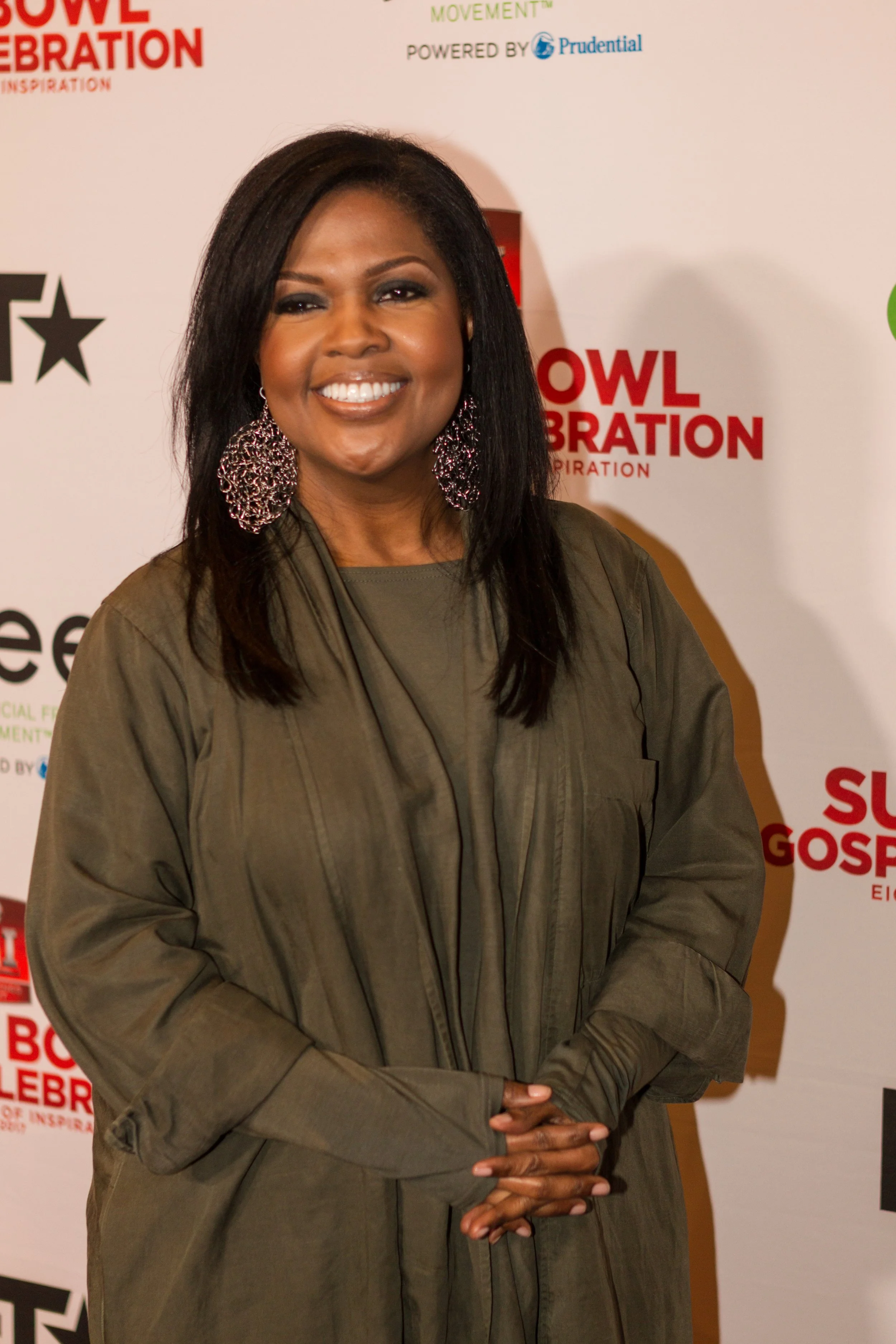
CeCe Winans is among the Black gospel artists who have performed the National Anthem before major sports events. Photo from Shutterstock.
And among the 80,000 digitized songs in the Black Gospel Archives (BGA) at Baylor University are lovely, heartfelt versions of “America the Beautiful” by Clara Ward and the Rev. Donn Thomas and impassioned readings of “God Save America” by the Spirit of Memphis Quartet and the Mighty Clouds of Joy, along with many, many more.
Each donation or loan of once-lost gospel vinyl to the BGA reveals new treasures and reminds me yet again of how little we really know about this foundational music.
For instance, until we began the BGA nearly 20 years ago, we didn’t know the extent to which gospel artists have been writing, performing, recording and releasing patriotic songs, almost from its founding in the 1920s.
Some other early releases by gospel artists include: “World II Ballad” (sometimes titled “Pearl Harbor”) by the Percy Wilburn Quartet, “Pearl Harbor, I and II” and “Why I Like Roosevelt” by the Soul Stirrers, “Comin’ in on a Wing and a Prayer” and “Stalin Wasn’t Stallin’” by the Golden Gate Quartet, and many others.
Of course, gospel artists – professional, part-time and occasional – served in the armed forces as well. Not all came home.
Which brings us to the “complex” part of the relationship between gospel music and patriotism. From the American Revolution through the Civil War, World Wars I and II, Korea, Vietnam and different bloody conflicts in Asia, African Americans have fought for someone else’s freedom. Disenfranchised Black soldiers, sailors, and pilots died so that others – including people in Europe or Asia – could vote and enjoy the benefits of freedom and democracy.
The great Muhammad Ali, who went to prison and lost years of his life rather go to Vietnam, famously once said the conflict was really about “white people sending Black people to fight yellow people to protect the country they stole from the red people.”
And yet ...
African Americans did serve. Heroically. Sacrificially. From the 369th Infantry (the feared “Harlem Hellfighters”) in World War I to the 332nd Fighter Group and the 477th Bombardment Group (the “Tuskegee Airmen”) in World II and uncounted others – Blacks served their country, even when their country didn’t serve them.
You could say the same for the many Native American, Japanese American and other military units that earned a reputation for bravery at the disproportionate cost of so many lives.
So as I hear Mahalia Jackson sing “Praise the Lord and Pass the Ammunition,” it gives me pause.
It seems to me that this is patriotism of a different order, maybe even a higher order. When a Black artist sings the National Anthem, the lyrics may have different resonance:
Oh, thus be it ever, when freemen shall stand
Between their loved home and the war's desolation!
Blest with victory and peace, may the heav'n-rescued land
Praise the Power that hath made and preserved us a nation!
Or when the famed choirs of Mt. Olive Baptist Church of Atlanta recorded “America the Beautiful,” did the members note irony in the words in chorus that claim:
America! America!
God shed His grace on thee,
And crown thy good with brotherhood
From sea to shining sea!
Or when an African American veteran, just returning from Iraq or Afghanistan or any of a dozen other “cold wars” discovers that a Southern legislature has gerrymandered his voting district away, what must he or she be thinking about this country?
God bless all of those who served and those who serve in these difficult, tumultuous times.
But in 2026, as I listen to these gospel songs, my admiration for African Americans and women and every other minority who is seeing their hard-fought rights being eroded or destroyed and yet continue to serve (and sing) in hopes of a better, more equitable, more just, more inclusive United States of America in the next 250 years, I stand in awe at their courage and faith.
For this may be the highest, truest form of patriotism.
———————————————————————-
Robert F. Darden is professor emeritus in Journalism at Baylor University and a member of the Overby Center panel of experts.
