
By Charles Mitchell
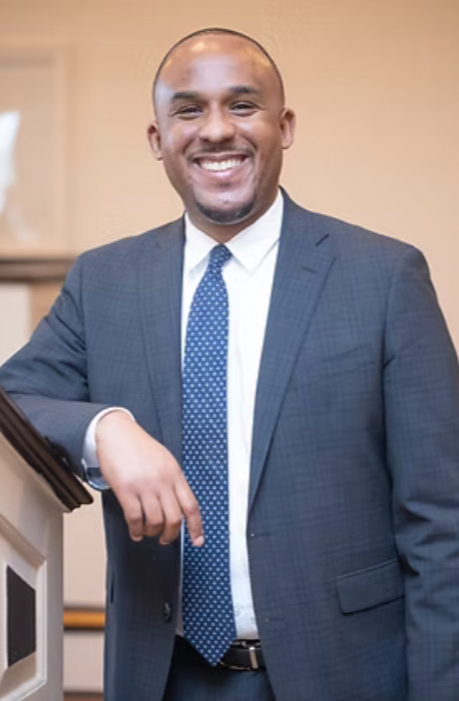
Given little chance, Sen.-elect Scott Colom has won a historic victory over incumbent Sen. Cindy Hyde-Smith.
Don’t believe anyone who offers a single explanation for Mississippi’s vote on Nov. 3. There were at least five factors in play when Democrats flipped a U.S. Senate seat from Republican control for the first time since John Cornelius Stennis retired in 1989. In what every news organization has called a “historic” election result, Sen.-elect Scott Colom, district attorney for the 16th Judicial District in Mississippi, will be the first Black in the Senate from Mississippi since Reconstruction.
Turnout
Six years ago, former U.S. Rep. and Secretary of Agriculture Mike Espy lost his challenge to incumbent Sen. Cindy Hyde-Smith. Espy, among Mississippi’s more widely known and respected Democrats, got 579,000 votes. In winning the election last week, Scott Colom polled 479,000, almost exactly 100,000 fewer.
What? Well, there was a presidential race in 2020. It was the one where Donald Trump, seeking a second consecutive term, lost to Joe Biden. Historically, mid-term elections attract fewer voters and that was part of the picture. Nearly 1.3 million Mississippians voted in 2020, and that number dropped to 942,000 this year.
The potential for an upset due to low turnout wasn’t lost on Republicans whose over-the-top ad messages repeatedly warned that defunding the police, enhanced transgender rights and other abysmal fates awaited MAGA folk who sat this election out. But sure enough, Hyde-Smith’s total plummeted from 710,000 in 2020 to 470,000.
Louisiana v. Callais
Yes. This is the case where U.S. Supreme Court decided it was okay to use political beliefs to draw voting districts. It triggered immediate redistricting in many states to either add more liberal or more conservative districts. Mississippi, unlike other states in the South, didn’t leap at the chance to do away with the state’s one Black-majority U.S. House district. But Bennie Thompson, who has held that seat since Espy gave it up in 1993, was clear that Gov. Tate Reeves and the Republican-dominated Legislature want nothing more than to gut the district where he’s been elected 18 times.
A third of Mississippians are Black, and the Callais decision was a wake-up call. As long as Republicans here said they were adjusting lines to add Republicans, not marginalize Black people, they would be on the right side of Callais. A sham, of course, but legal.
Prices
The rest of America doesn’t really care what happens in Mississippi unless they can tsk-tsk the state when some racist doofus does some racist doofus thing. So, there’s no intensive pre-election or exit polling here, but we’re really not that different in how we choose leaders. Election genius James Carville, the most plain-spoken of plain-spoken Democratic consultants, famously intoned, “It’s the economy, stupid” in 1992. That mantra propelled former President Bill Clinton into office and denied George H.W. Bush a second term. Bush’s approval rating was soaring, so no “big name” Democrat would challenge him. Carville advised the almost unknown governor of Arkansas to harp on rising consumer prices, and that proved to be Clinton’s ticket.
This year, in a state where people are working harder than ever and each paycheck buys less, the economy was on everyone’s mind.
Will the Democrats and Colom fix inflation? It was actually worse the last time the Democrats held majorities, but frustrated people tend to fire those they believe are part of the problem in favor of those who might find a cure. Mississippi joined the nation on that score.
Race
It may seem strange to phrase it this way, but Colom could not have won without the support of white voters.
It’s in our nature to identify with those like us. Hunters hang out with other hunters. Pickleball players hang out with other pickleball players. Whites tend to vote for whites, and Blacks tend to vote for Blacks. Think about the fact that every candidate in every election always insists on sharing their humble roots. This tactic is to identify with the masses and form an “I’m just like you” relationship. Sometimes it works, sometimes it doesn’t.
It’s no surprise that, according to Times Voter Trends, 90 percent of Black Mississippians who voted chose to vote for Colom. The same analysis, however, shows one in four white voters cast their ballots for the soon-to-be-former prosecutor. That’s about 120,000 votes – and Colom won by only a few thousand. It is error when pundits claim the Senate election was 100% about race. It simply wasn’t.
The candidates
Sen. Cindy Hyde-Smith has been and remains clearly aligned with conservatives. Her fealty to President Trump was her strongest (if not only) card. Mississippi is still solidly in the Republican column. Large margin wins by the state’s three incumbent Republican members of the House proves it. People here – across racial lines – didn’t wake up on Election Day and decide to become far-left liberals. The reality is that Hyde-Smith was her own worst enemy, apparently thinking a low visibility – no debates, very few town halls or press conferences – would keep her ahead. This is a state where “retail politics” matters. There are only 3 million Mississippians. Pressing the flesh makes a difference. People like to know their officials. Colom was active and accessible. Clearly that helped.
Related to this was campaign advertising. Colom had several clever ads, notably his takeoff on Hyde-Smith’s suggestion to choose another protein in response to unaffordable price spikes for beef. Colom’s people seized on this Marie Antoinette, “Let them eat cake,” arrogance with a “choose another senator” message. For her part, Hyde-Smith’s people stuck with the usual depiction of Democrats as fanged radicals. Worse, a mainstay was her bragging about providing “the largest tax cut in history” to voters dazed by what they were paying at the pump, grocery store and everywhere else. That message didn’t, as they say, resonate.
——————————————————————
Charles Mitchell is an associate professor in the School of Journalism and New Media at the University of Mississippi and a member of the Overby Center panel of experts.