
Overby Center program panel agrees guardrails are needed for college sports
By Akayla Hughes
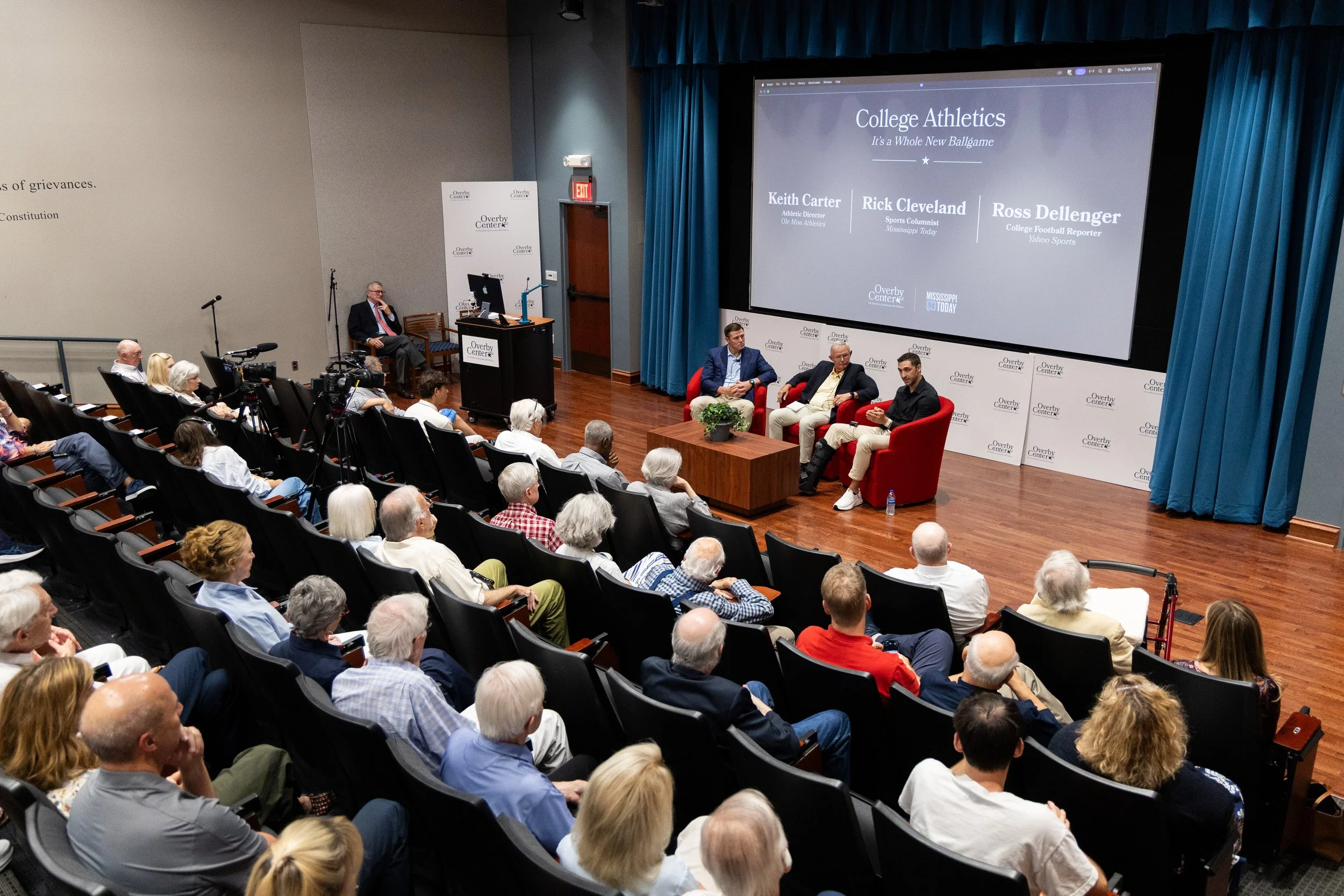
The need for guardrails and limits on money and budgets to protect the competitiveness and integrity of college sports emerged as a consensus in a panel discussion at the Overby Center for Southern Journalism and Politics.
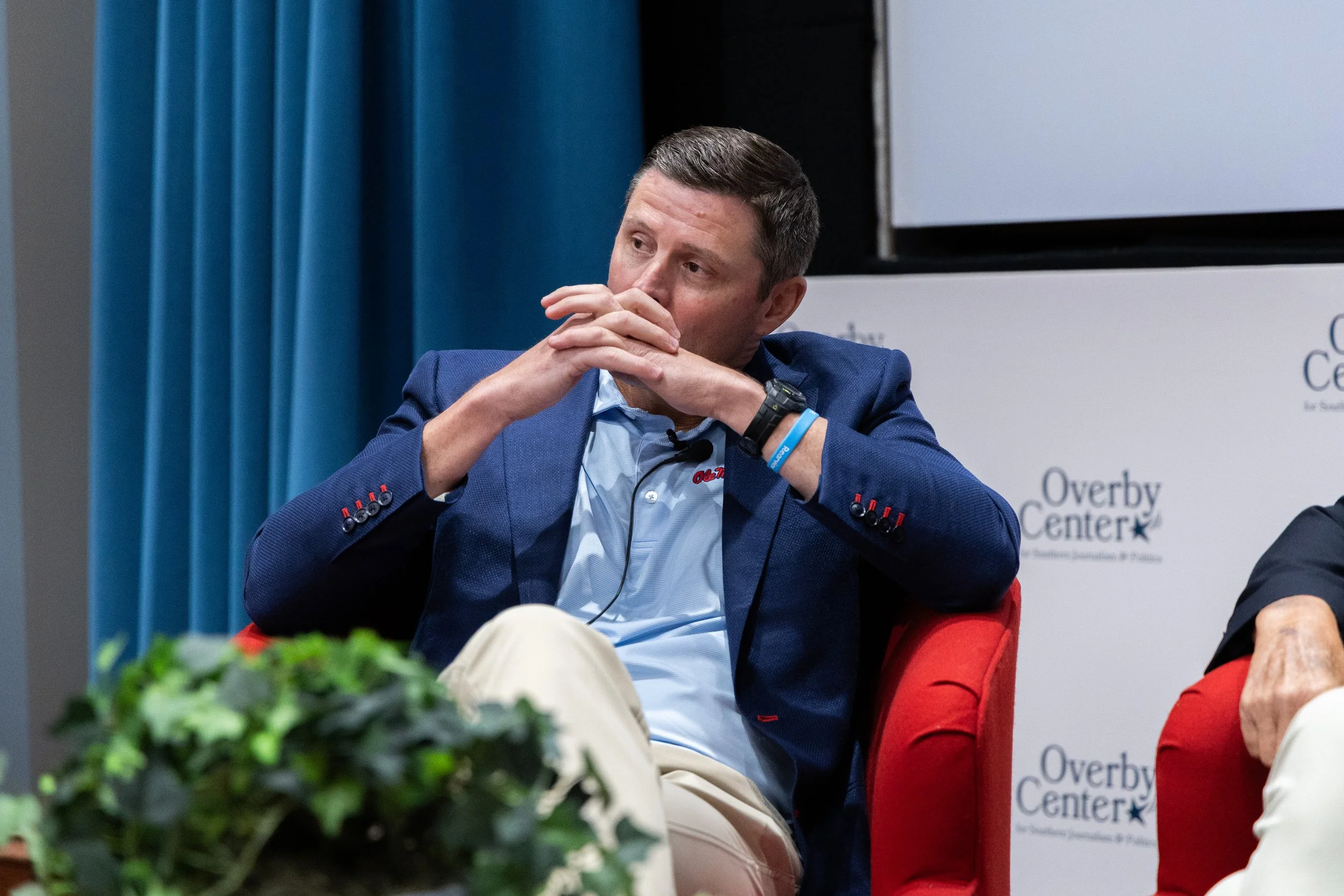
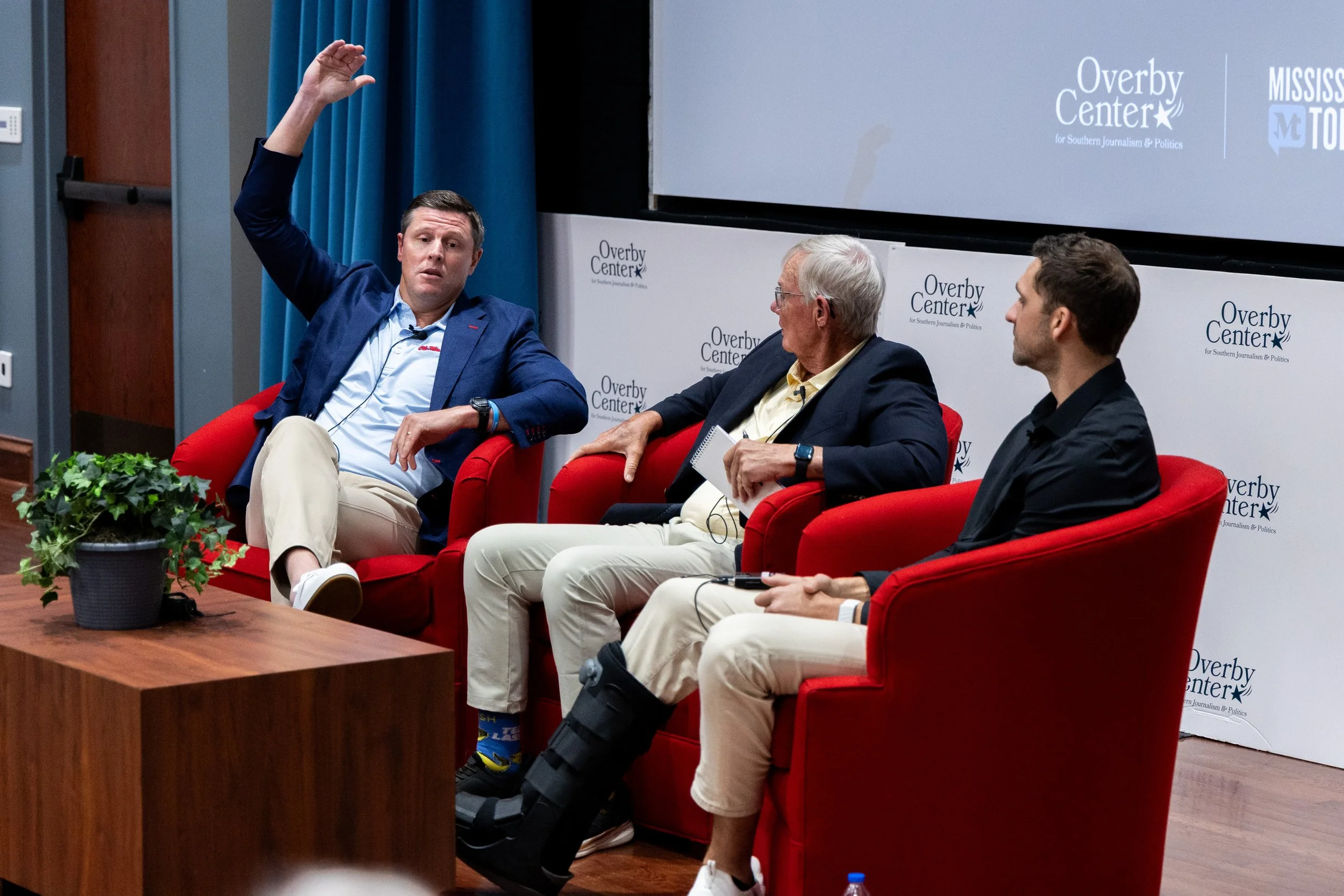
“I think that there's definitely some change that is needed, some guardrails that are needed,” said Keith Carter, vice chancellor for intercollegiate athletics at the University of Mississippi. “I'm a big advocate for paying the players. I think they deserve part of the revenue that we earn, they're a huge part of that. But at the same time, if we can get some of the toothpaste back in the tube and try to get a little stability in the marketplace, that would be huge."
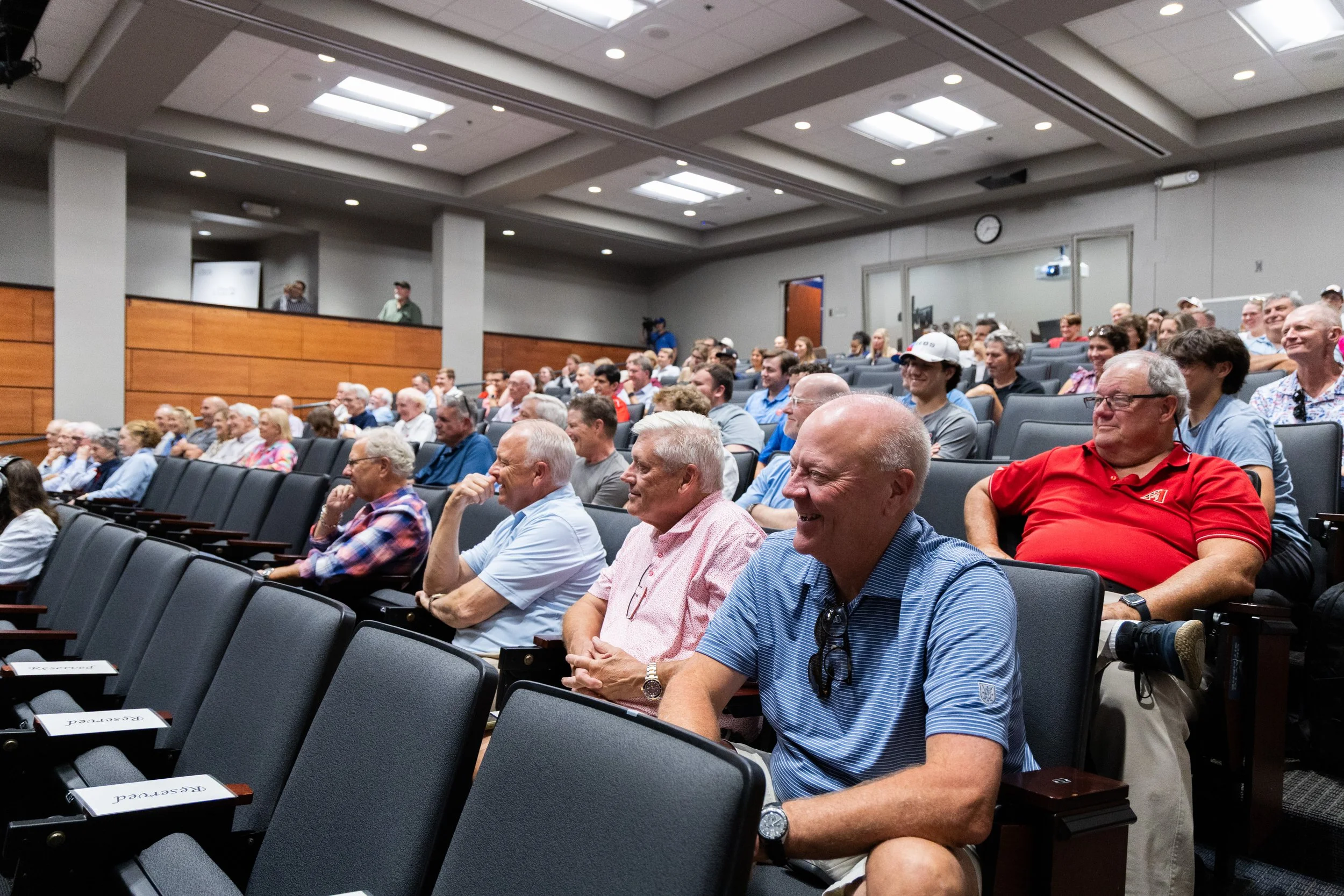
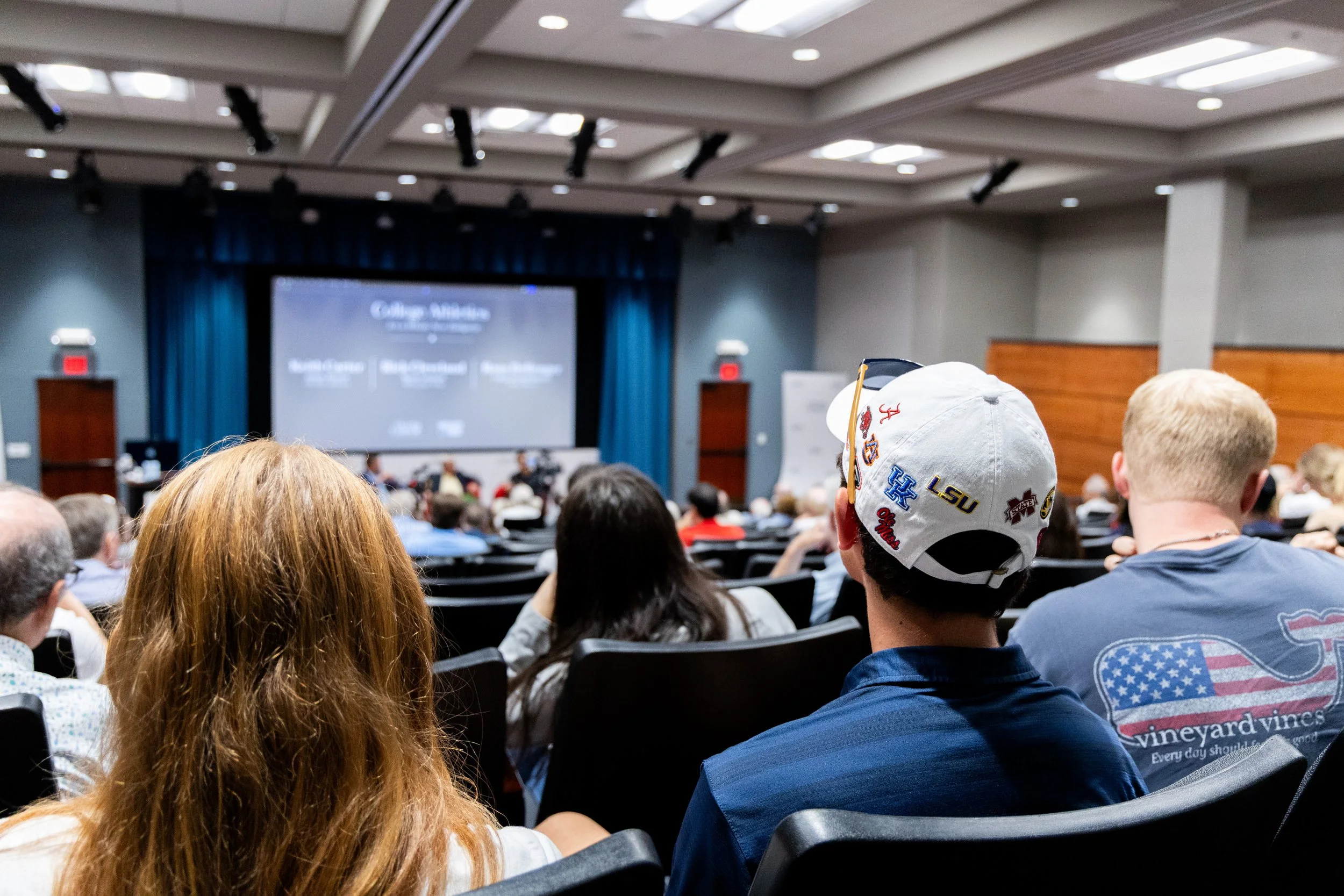
The discussion was part of “College Athletics: It’s a Whole New Ballgame,” a program on Sept. 17 in the Overby Center auditorium. The program was co-sponsored by Mississippi Today and the Overby Center.
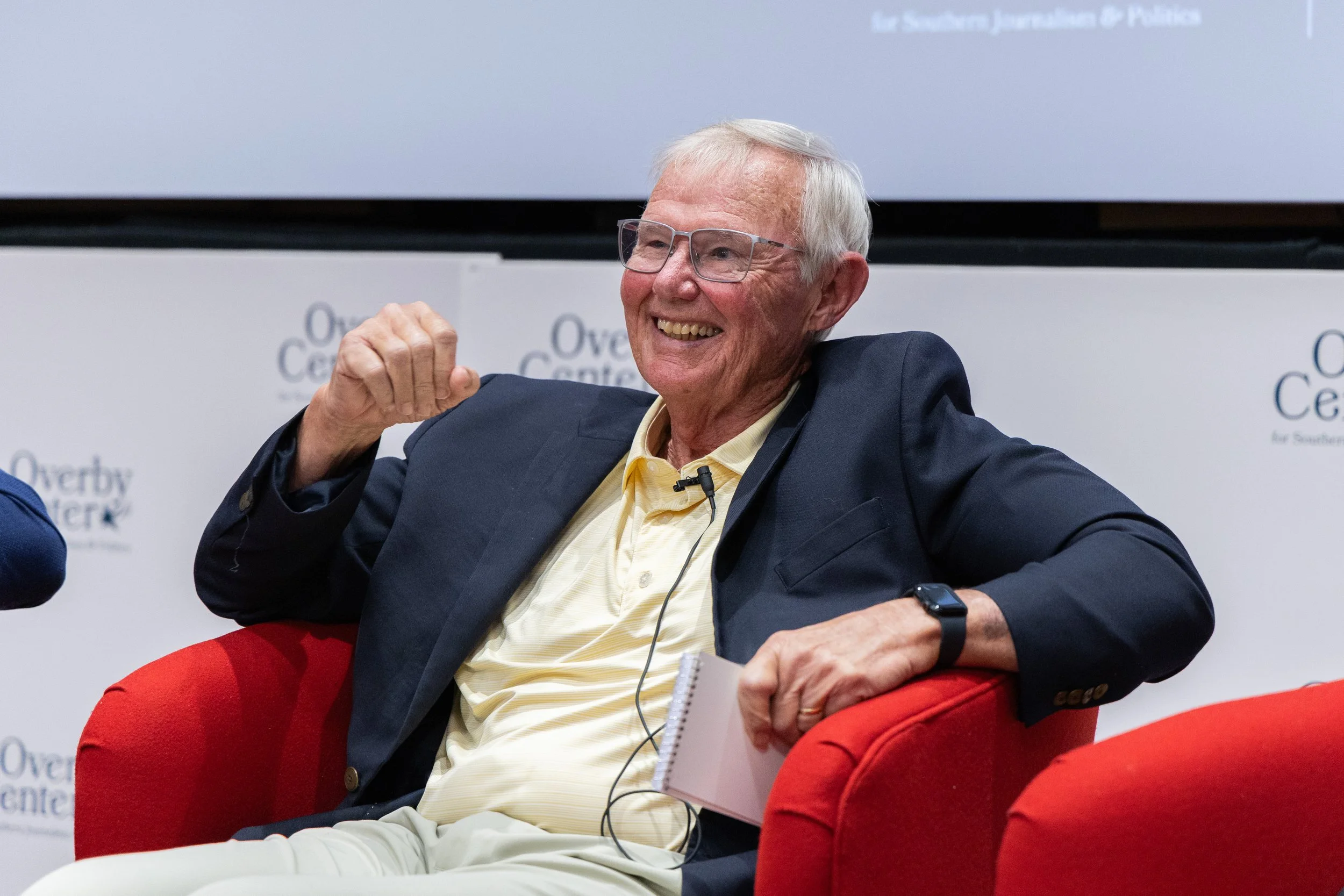
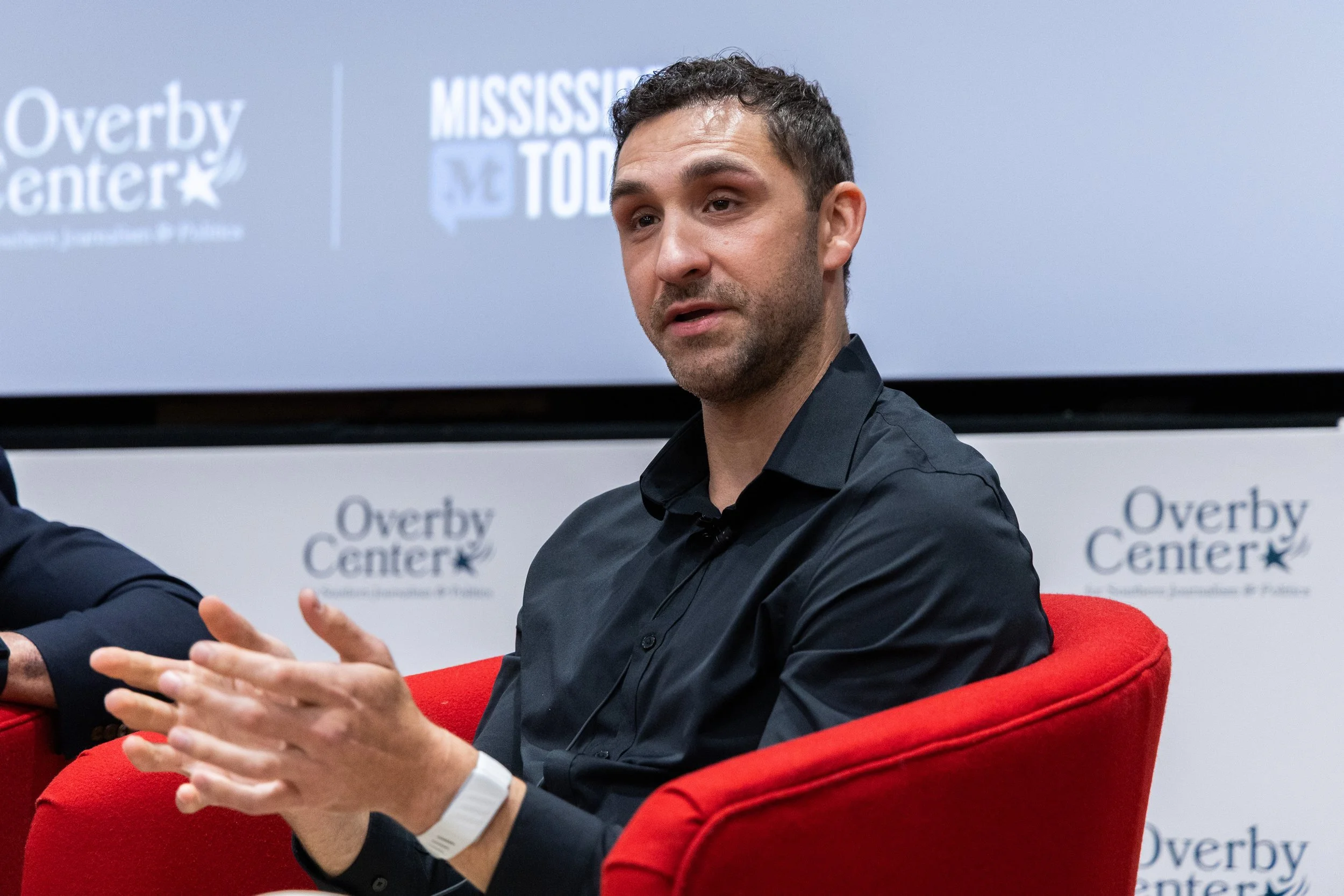
Rick Cleveland, sports columnist for Mississippi Today and moderator of the program, questioned panelists about the rapidly changing economics of college athletics and the Protect College Sports Act of 2026. Joining Carter and Cleveland on the program was Ross Dellenger, college football writer for Yahoo Sports.
The Protect College Sports Act is sponsored by Sen. Ted Cruz (R-Texas) and several others of both major political parties, making it a bipartisan effort. President Donald Trump has expressed support for the bill and indicated he will sign it if passed by Congress.
The 170-page bill would set laws on player revenue-sharing, set a limit of a single penalty-free transfer and enforce name, image and likeness (NIL) regulations. The NCAA would receive limited antitrust exemption in return.
Carter said he supports some changes in the current use of NIL in which college players are able to receive compensation. High-profile athletes in football and basketball receive multimillion-dollar compensation annually.
The Athletic, a publication of The New York Times, recently published a summary of individual NIL budgets of various college football programs. Ole Miss was placed eighth with a reported budget of $39 million to $45 million. Carter would not confirm this number.
“I won't confirm our number that The Athletic put out there, but I will say they were in the ballpark,” Carter said. “We had some pretty extenuating circumstances this year as we were building our roster, with some others wanting to take our players. We had to give out to make sure we held on to them.”
Carter said that the focus of resources has shifted with the presence of NIL.
“Resources used to be about facilities and travel, those types of things,” Carter said. “Now it’s about who we can put on the field.”
Carter noted the significant differences in budgets between Ole Miss and universities such as the University of Texas at Austin. According to financial data filed with the NCAA, the University of Texas had total athletic revenue of $353 million in fiscal year 2025. Ole Miss had $178.6 million in the same period.
Dellenger believes that getting past the House of Representatives will be the most difficult step in getting the Protect College Sports Act passed.
“So this bill will pass the Senate next week, but then it goes to the House,” Dellenger said. “They like to call it, on the hill, a circus, and it's just kind of an unruly chamber of various cliques. And it's sort of hard to predict how people are going to vote, no matter their party in the House, especially with a bill that is so specific.”
Carter said that the timeliness of the bill going through the House of Representatives will pose the biggest risk to administrators. He noted that another portal window is approaching in January and that administrators have been told that the House won’t be taking up consideration of the bill until after the midterm elections in November.
“If we don't have anything in place by that January portal window, we're going to be looking square in the face of another 50% to 60% market increase,” he said. “We would love to get some hard and fast clarification on if we can truly make it a hard cap.”
Carter was named vice chancellor of intercollegiate athletics at Ole Miss in 2019. He played guard on the Ole Miss basketball team and was a four-year starter, graduating in 1999 and earning All-SEC honors his last two years. He played professionally for nine seasons, primarily in Italy. He joined the Athletic Department at Ole Miss in 2009. Carter’s administrative career at Ole Miss has been marked by record fundraising, innovative NIL initiatives including national recognition of the university’s Grove Collective, and major competition successes including two team national championships. Ole Miss athletes have achieved graduation rates exceeding national averages for three consecutive years. Carter has recently been named to a five-year term on the NCAA Division I Men’s Basketball Committee. Carter earned B.A. and B.B.A. degrees in business from Ole Miss and an M.B.A. in professional studies from the university in 2016.
Dellenger is one of the nation’s top reporters regarding off-the-field issues in college sports, including NCAA governance, College Football Playoff changes, NIL and the compensation model for athletes. He’s embraced coverage of the business of college sports as the industry itself evolves from an amateurism product to a professional entity. Dellenger was born in Louisiana and grew up in Biloxi. He’s a graduate of Mississippi State University and worked at several newspapers in his 20-year career, including The Clarion-Ledger. Dellenger was named the 2025 National Sports Writer of the Year by his peers. He was a national writer for Sports Illustrated before leaving for Yahoo Sports. He lives in Washington, D.C.
Cleveland is a member of the Mississippi Sports Hall of Fame and the Mississippi Presss Association Hall of Fame. He is a graduate of the University of Southern Mississippi and began his career at the Hattiesburg American. He has worked at other newspapers including The Clariion Ledge in Jackson. He began as a sports columnist at Mississippi Today in 2016, the year the nonprofit news organization was founded. In its short history, Mississippi Today has had a significant impact on news and journalism, including winning a Pulitzer Prize in 2023.
Carter said that he does not believe that the Protect College Sports Act is perfect, but it is a step forward.
“The bill would be a positive step,” Carter said. “I think we all believe that. We don't think the bill is perfect. Anytime you get politics involved only the person who puts the original bill in thinks it's a perfect bill. But I do think that if it was passed tomorrow, it would put us in a more stable place than we are today.”
The Overby Center was founded in 2007 with a $5 million grant from the Freedom Forum. Al Neuharth (1924-2013), a lifelong journalist and First Amendment advocate, founded the Freedom Forum, a nonpartisan foundation that champions the First Amendment as a cornerstone of democracy, on July 4, 1991. He was also the founder of USA TODAY. The Overby Center continues as an affiliate of the Freedom Forum with a strong emphasis on the First Amendment.
——————————————————————————
Akayla Hughes is an undergraduate student pursuing a bachelor’s degree in journalism in the University of Mississippi School of Journalism and New Media, where she serves as a Student Worker at the Overby Center.