As divided as we are by politics and culture, sports loyalties unite us for the good
By John McClain
The forefathers of American sports would be flabbergasted to see the evolution of their creation over the last 250 years – the passion, prominence and prejudice of a nation’s fans consumed by sports at the professional, collegiate and amateur levels.
As America celebrates its 250th birthday, this is an ideal time to look back at the beginning when sports were purely recreational and performed for the enjoyment and entertainment for a few, unlike the masses of today when players, coaches, owners and organizations are idolized and deified. And also in this year of patriotic celebrations, we understand that as bitterly divided as we are on politics, the loyalties we share in sports unite us in powerful ways difficult to explain or understand.
In the beginning of America’s love affair with sports, there was no Babe Ruth, Jim Thorpe, Knute Rockne, Red Grange, Jackie Robinson, Muhammad Ali, Jesse Owens, John Wooden, Roberto Clemente, Tom Brady, Michael Jordan, Jack Nicklaus, A.J. Foyt, Venus and Serena Williams or Michael Phelps. There was no Shot Heard Around the World, Immaculate Reception, Miracle on Ice, Four Horsemen of the Apocalypse or Broad Street Bullies.
When the first Pilgrim set eyes on Plymouth Rock in 1620, Native Americans had been playing lacrosse since the 12th Century, making it America’s oldest sport. From lacrosse to this year’s World Cup that was witnessed by millions in America and billions around the world, America has become the preeminent country for sports.
Long before delegates from the 13 colonies signed the Declaration of Independence on July 4, 1776, sports with a European influence were becoming popular – with wagering a component tied to results, as it continues to be 250 years later.
At the beginning of the 19th Century, a young United States of America was becoming fanatical about boxing, wrestling, horse racing, cricket, lawn bowling, horseshoes, rowing and feats of human strength, speed and endurance.
As more immigrants came to America seeking a better life than the one they left behind, urban areas grew and provided a platform for team sports.
By the mid-19th Century, team sports developed, and the fanaticism became more widespread. Sports helped give America an identity. Eventually, the popularity of sports transcended the playing field, became a reflection of society and portrayed a significant role in the country’s culture. But it took a long time to get there.
Let’s start with baseball and the controversy over who had the biggest impact on its origins.
In 1839, Abner Doubleday, a U.S. Army general who fought in the Civil War, was given credit for establishing baseball in Cooperstown. N.Y., where the National Baseball Hall of Fame and Museum is situated.
There also is evidence that Alexander Cartwright deserves more credit, certainly as much or more than Doubleday, for his role in the origins of baseball. In 1845, Cartwright helped establish the New York Knickerbocker Baseball Club. Many of the rules that are still used today are credited to Cartwright.
In truth, there’s no irrefutable evidence that shows Doubleday or Cartwright as baseball’s original influencer, but in Cooperstown, the field is named after Doubleday, not Cartwright. Either way, baseball flourished so much that it became the National Pastime and survived the biggest cheating scandal in the history of professional sports.
In 1919, baseball Commissioner Kenesaw Mountain Landis gave eight members of the Chicago White Sox – including “Shoeless” Joe Jackson, one of the greatest hitters in history – lifetime bans for their role in losing the World Series to the Cincinnati Reds. The Black Sox Scandal led to major changes in the game, and even though the eight players were acquitted in a 1921 trial, Landis refused to let them return to the game or ever be eligible for the Hall of Fame.
During that period, interest in golf started to skyrocket. No one did more to build the game’s significance than Bobby Jones, who founded the Augusta National Golf Club and co-founded The Masters, still the most prestigious tournament in the world.
In the early part of the 20th Century, baseball was the country’s most popular sport. College football was a distant second. Pro football wasn’t established until 1920 when a group of businessmen met at an automobile dealership in Canton, Ohio, to discuss a new professional football league.
Included in the group were Jim Thorpe, one of the greatest athletes in history, and George Halas, who would become the founder, owner and coach of the Chicago Bears. That afternoon, they established the American Professional Football Association. Each team agreed to pay an annual fee of $100. Two years later the name was changed to the National Football League.
It would be almost 30 years before the NFL would earn its place in the national consciousness. Baseball still dominated the sports world, but college football had a growing popularity.
In the late 1890s and early 1900s, college football was such a violent sport that players were dying while participating. An offshoot of rugby and soccer brought to America by European settlers, the violence created such a problem that President Teddy Roosevelt threatened to abolish the game if administrators didn’t change the rules to provide more protection for players.
As the college game became safer, stars were born, none more widely known and respected than Illinois running back Red Grange, “The Galloping Ghost,” who played before sellout crowds of 80,000 while the NFL struggled to attract fans.
Notre Dame coach Knute Rockne, who revolutionized the forward pass while building a 105-12-5 record from 1918-1930, made the Fighting Irish the most popular team in the country. Rockne, who won three national championships, died in a plane crash at the age of 43, and a nation mourned his death.
Newspapers, including 15 in the New York metropolitan area, helped popularize sports. But in the late 1930s, newspapers had competition from radio and television.
The first radio broadcast of a sporting event was a boxing match in 1921. The first televised event was a college football game in 1939 – the same year the Summer Olympics were televised for the first time. Baseball provided the first color broadcast in 1951.
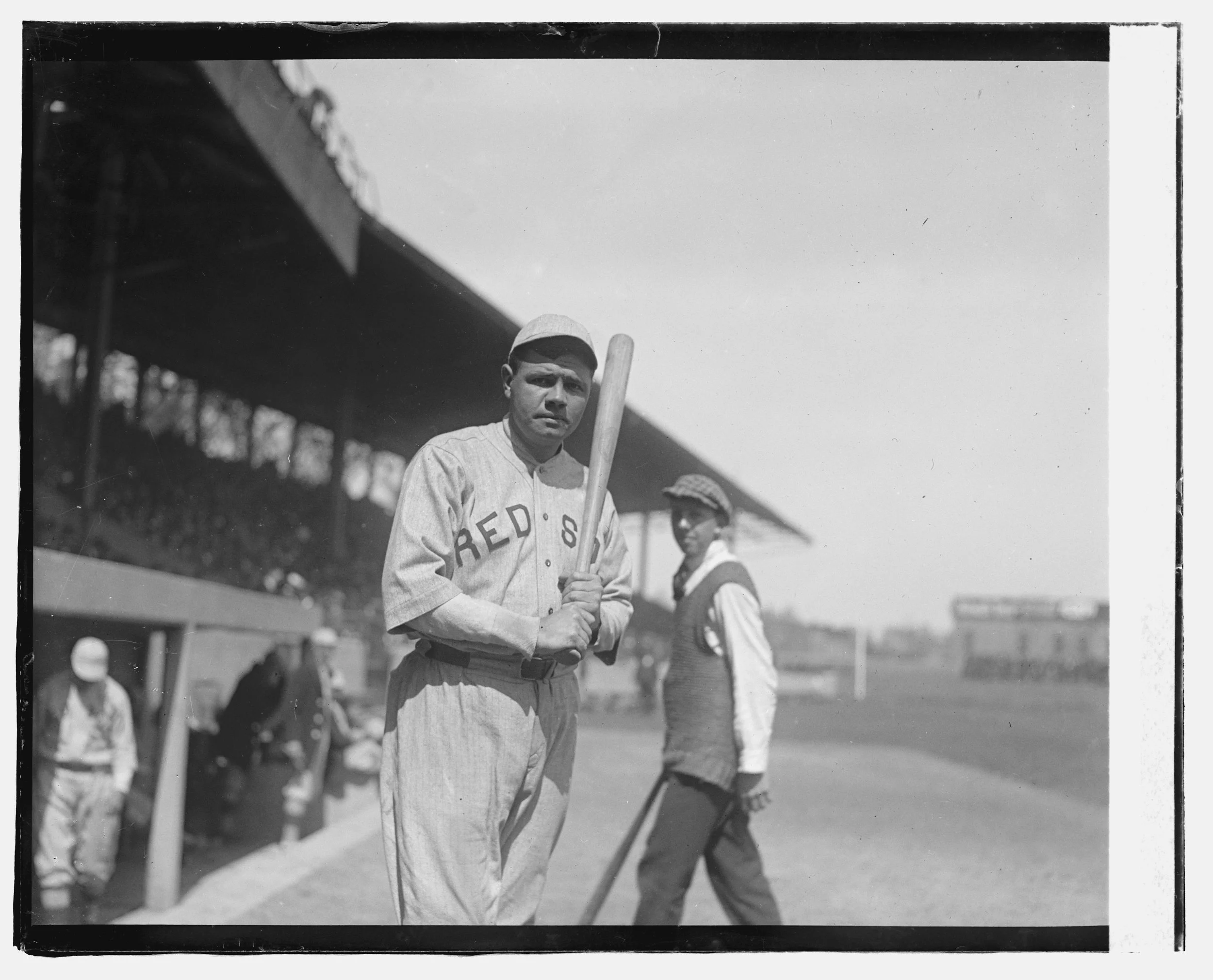
New York Yankee legend Babe Ruth is arguably the most famous athlete in the history of U.S. sports. Photo from Shutterstock.
Baseball also provided the most famous player in American sports history – Babe Ruth. He grew up in a Baltimore orphanage, signed with the Boston Red Sox and was traded to the New York Yankees for $100,000 – a deal known as “The Curse of the Bambino.”
With Ruth hitting 714 home runs, including a record 60 in 1927, the new Yankee Stadium became known as “The House That Ruth Built.” In 1930, during the Great Depression, Ruth signed a contract for $80,000. Reminded that President Herbert Hoover’s salary was less than his, Ruth said, “I had a better year.”
After the end of World War II, sports became an escape for fans and big business for owners, but there was still a humongous problem: Major League Baseball still didn’t allow integration. Since 1880, baseball operated with an unwritten rule against allowing Black players.
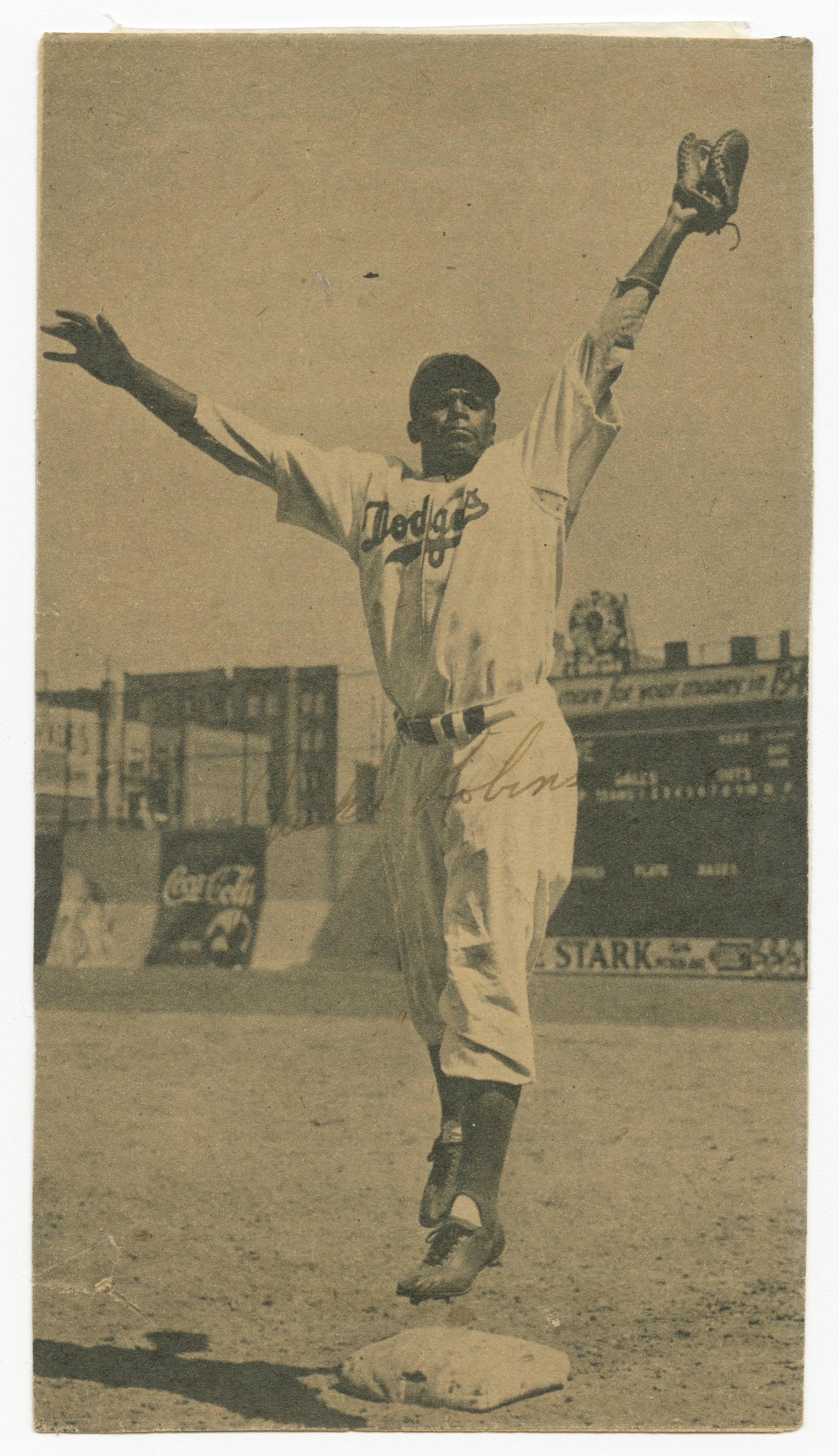
Jackie Robinson became the first Black to play Major League Baseball in 1947, changing sports in the United States. Photo from Shutterstock.
Branch Rickey, the Brooklyn Dodgers’ president, general manager and part-owner, changed baseball history when he signed Jackie Robinson and put him in the lineup in 1947. Rickey’s decision – not to mention Robinson’s performance – opened doors for players from the Negro Leagues to cross the color line.
Robinson, a portrait of perseverance on and off the field, said, “A life’s not important, except in the impact it has on other lives. There’s not an American in this country free until every one of us is free.”
While baseball continued to dominate the professional sports landscape, it wasn’t until 1958 when the NFL finally captured the attention of America’s fans. In the first NFL overtime game, the Baltimore Colts defeated the New York Giants 23-17 when fullback Alan Ameche scored on a 1-yard run.
That championship game at Yankee Stadium – featuring 17 members of both franchises who would eventually be enshrined in the Pro Football Hall of Fame in Canton, Ohio, was televised by NBC, with an estimated national audience of 45 million.
Interestingly, the Giants’ offensive and defensive coordinators in that defeat were Vince Lombardi and Tom Landry, both of whom are members of the Pro Football Hall of Fame. As the head coach of the Green Bay Packers, Lombardi won five NFL championships, including the first two Super Bowls.
“Winning isn’t everything – it’s the only thing,” was Lombardi’s most famous quote. He also said, “Perfection is not attainable. But if we chase perfection, we can catch excellence.”
Landry also caught excellence, winning two Super Bowls during his 28-year coaching career with the Dallas Cowboys.
That Colts’ victory was called “The Greatest Game Ever Played.” A group of 66 media members with decades of experience covering the NFL voted it as the best game of the league’s first 100 years.
That Colts-Giants game also provided impetus for two wealthy Texas oilmen – Dallas’ Lamar Hunt and Houston’s Bud Adams – to meet soon after and devise a plan to become co-founders of a new football league. On Aug. 3, 1959, Hunt (Dallas Texans) and Adams (Houston Oilers) announced the American Football League in Adams’ Houston office.
The new league started in 1960 with eight teams. The Oilers won the first two championships and lost a third title game to the Texans, who moved to Kansas City and became the Chiefs.
Hunt, who created the name “Super Bowl,” helped orchestrate the merger with the NFL in 1970, ending a financial war that changed pro football history and set up the NFL to become the most popular league in America – a popularity that dwarfs Major League Baseball, the National Basketball Association and the National Hockey League.
Television has played a substantial role in the NFL’s popularity. Networks and streaming services all want a piece of the NFL, which has made franchises worth multiple billions. The invention of the Internet and the demise of newspapers and traditional sportscasts on local television stations have created new avenues online, another pathway to the public.
The more popular sports became, it made sense that women wanted to participate. Title IX was created in June of 1972, and it prohibited sex-based discrimination in colleges. Today, women thrive in college sports and have professional leagues to continue their careers.
With the growing popularity of sports in America, politicians and lawyers wanted their pound of flesh, so to speak. Lawsuits, especially in college sports, are widespread. College football is in chaos because of a court case that implemented the transfer portal that allows players to switch schools whenever they want to. Players earned the right to market their name, likeness and image, which has resulted in many being paid millions of dollars to move from program to program.
President Donald Trump has injected himself into sports more than any president. In 2016, the first year of his first term, he blasted NFL players for following the lead of San Francisco quarterback Colin Kaepernick, who took a knee during the playing of the national anthem to protest police brutality around the country. Trump called players “sons of bitches” for taking a knee. Trump’s comments created a firestorm in the NFL and basically ended Kaepernick’s career because every owner who needed a quarterback was afraid to sign him because of backlash from Trump and sponsors.
During this year’s World Cup, the U.S. was scheduled to play Belgium in the Round of 16 at Seattle. Folarin Balogun was issued a red card in the previous victory and would be unable to play. Trump called his close friend, FIFA President Gianni Infantino, and asked for a review of the red card. Balogun was allowed to play, and Trump’s involvement turned fans from around the world against the U.S., which lost to Belgium anyway.
Celebrating 250 years of sports in America makes us wonder what’s in store for the next 250 years. Will sports be overrun by politics, divided by race and gender, degraded by cheating scandals, unionized at the college and high school levels, or destroyed by enormous egos?
America has experienced them all, but the bottom line remains the same: When the whistle blows, the product on the field, on the court or in the ring, remains sublime. And September is the time of year when fans across the NFL, SEC, Big 10, Big 12, ACC and every other conference in our country hear those six magical words: Are you ready for some football?
——————————————————————————
John McClain is in his 50th year of covering the National Football League including the first 47 at the Houston Chronicle. He’s a member of the Pro Football Hall of Fame and the Texas Sports Hall of Fame. He lives in Houston.