
Finding ‘a more perfect union’ remains as challenging as it was in our beginning
By Charles Mitchell
Harry Truman and Tom Clark were, in Southern speech, “tight.” When Franklin Roosevelt died and Truman suddenly became president in 1945, he immediately turned to his Texas chum to serve as attorney general. They were a good and effective team, but when Truman was elected to a full term in 1948, Clark said thanks, but he was going back to Dallas and his private law practice. He didn’t. A vacancy occurred on the Supreme Court and Truman overcame media mocking for choosing his buddy – who had never been a judge – for the seat.
The less-than-happy ending to this story is that after leaving office, Truman told people the biggest mistake of his seven years in office was appointing Tom Clark. Why? Because Clark didn’t decide a case the way Truman wanted it decided. Truman wasn’t a bombastic president, and Clark is a fairly low-key figure in the history of American law. Citizens, however, should rejoice that they “fell out.”
Donald Trump is, of course, bombastic (to say the least), and in recent days has voiced his disappointment when justices he nominated declined to rule as he wished. “It is a court that will go down as having rendered some of the most destructive, hurtful and damaging decisions in our country’s history,” he posted after his plan to restrict mail-in voting was rejected. “These are not the people I interviewed to serve on the United States Supreme Court,” Trump added. “They are merely a shell of their original selves.” Again, this eruption is a good sign for democracy.
Nations need laws, always have. In their ideal form, rules or laws provide predictability and order. Another ideal is providing safety and the opportunity to prosper.
History records that Hammurabi’s 282 edicts were chiseled into stone about 1782 B.C. America, of course, was created 34 centuries later during what’s recorded as the Age of Enlightenment. Philosophers were pushing the novel idea that people should make their own laws. Hammurabi had an army and executioners. The idea here was to govern by consent and with reason and fairness and, importantly, to have three branches of government to attempt to maintain balance. This arrangement was devised, as Thomas Jefferson wrote, to recognize our natural law right in pursuit of a happy life. It was up to the judicial branch to interpret and apply the law. The Founders had faith in the belief later expressed by minister Theodore Parker in 1853 that the arc of the moral universe is long, but it bends toward justice.
America’s pursuit has not been perfect. Far from it. The Founders knew it wouldn’t be. The Constitution was written as a blueprint on which to base development of a more perfect union. It was never intended to be anything else.
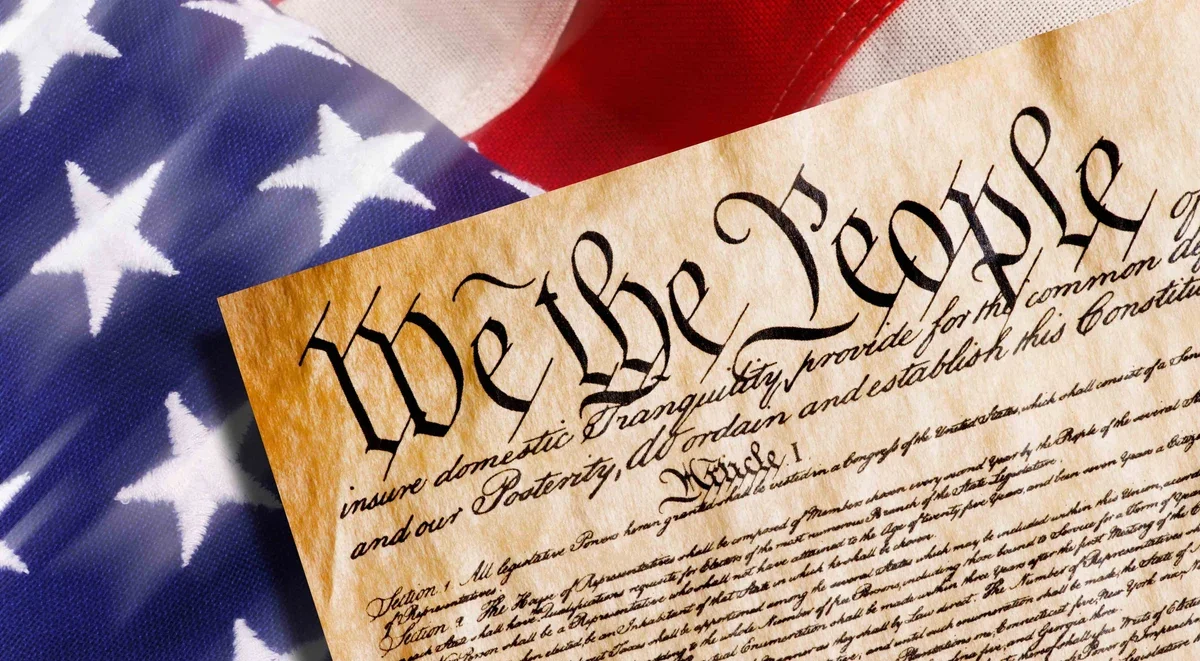
One essential to the pursuit is that written laws are fair, meaning they apply equally to all. St. Thomas Aquinas went a bit deeper, saying that just laws uplift humanity while unjust laws are degrading.
The other essential is that those chosen to interpret and apply laws are as neutral as humanly possible – not driven by partisanship and certainly not by notions of power. Their job is not to use their gavels to further their subjective viewpoints.
Finding these people has never been easy. Some states elect judges. Some states and the federal system use the executive appointment and legislative confirmation process. Other states have devised their own approaches.
After 250 years there’s still no absolute, perfect way to find among us those who are able and will interpret and apply the laws of the nation.
Today, with more stringent partisanship, there’s slippage in the judicial branch. These days, when any case or controversy goes before many state and federal judges, there’s little doubt about the outcome because those judges have established personal patterns of prejudice. Some are “hanging judges.” Some are “snowflakes.” Most jurisdictions have mechanisms to address what lawyers call “forum shopping” for a judge likely to favor their client, but the fact that these mechanisms exist is damning in and of itself.
There’s nothing more unhealthy for democracy than to have a legal system that mirrors the politics of the day. In “Truman’s Court: A Study in Judicial Restraint,” lawyer and historian Frances Rudko wrote that during Truman’s presidency, Tom Clark was “dedicated to the work of judging, not ideology.” Whenever people see a judge who can’t be “pegged” and whose rulings are truly neutral, they are seeing the system work as designed.
It was a challenge to find these people in 1776, and it’s a challenge today.
———————————————————————
Charles Mitchell is an associate professor in the School of Journalism and New Media at the University of Mississippi and a member of the Overby Center panel of experts.
