
Robert Duvall on sin, redemption and the true South
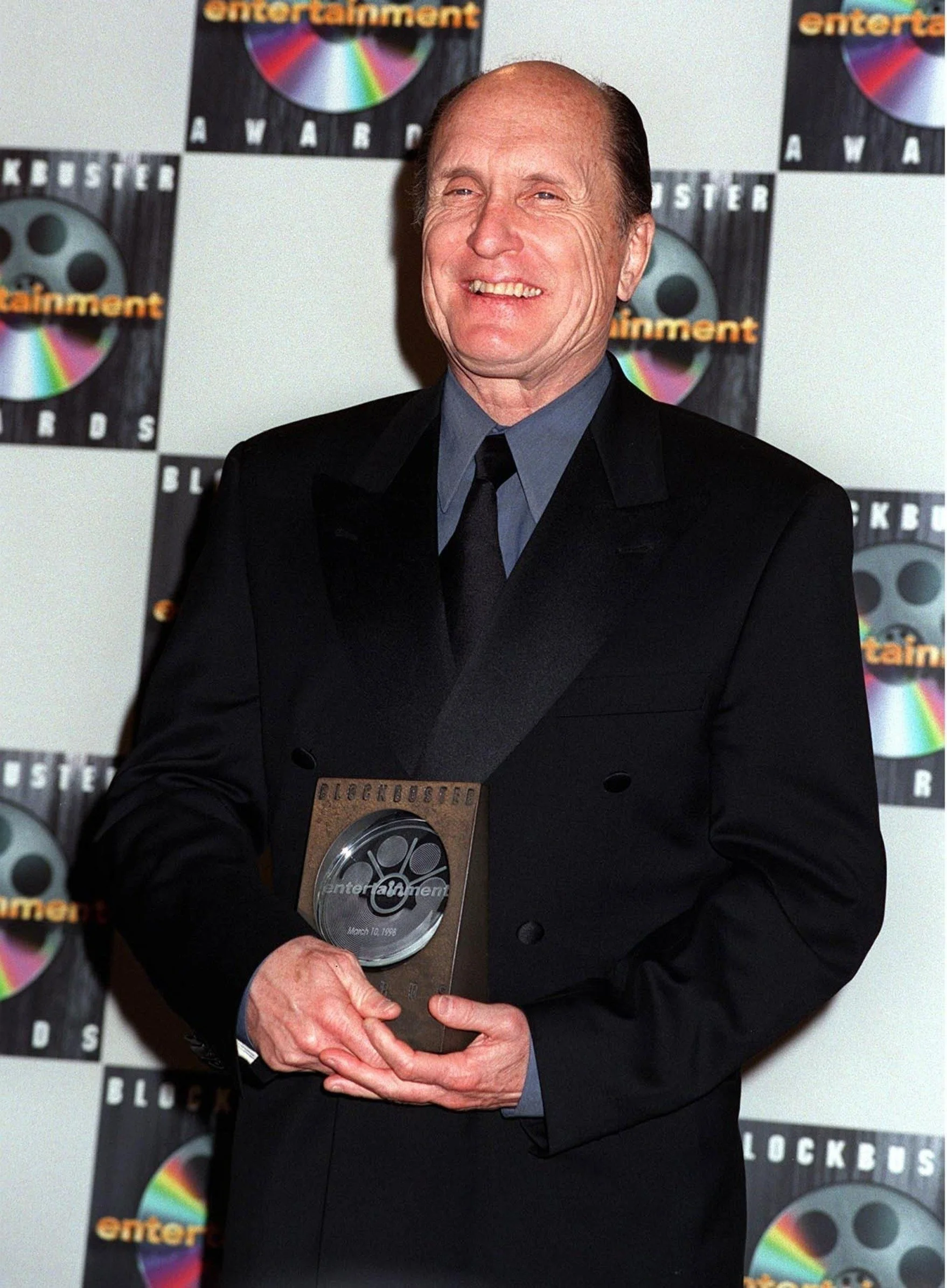
Academy Award-winning actor Robert Duvall had specific ideas about the South and religion. Photo from Shutterstock.
By Terry Mattingly
In the spark that ignites the drama in "The Apostle," Robert Duvall's Pentecostal preacher confronts his wife's lover at a youth baseball game, striking him down with a baseball bat in a flash of deadly fury.
The younger preacher dies and Euliss F. "Sonny" Dewey runs from the law in Texas, fleeing into Louisiana in an attempt to find forgiveness and a new life. But he wasn't running from God. He was too angry to be talking to God, pouring his pain into an epic late-night rant, asking why he had to lose his wife, his children and his church.
"I'm gonna yell at you 'cause I'm mad at you. I can't take it! Give me a sign or somethin'. Blow this pain outta me. Give it to me tonight, Lord God Jehovah. If you won't give me back my wife, give me peace. Give it to me, give it to me, give me peace!" shouted Duvall, riffing on the lines in his handwritten script for the movie.
"I don't know who's been foolin' with me. You or the devil. But I'm confused. I'm mad. I love you, Lord. I love you, but I'm mad at you. I am mad at you! So, deliver me tonight, Lord. What should I do? Should I lay hands on myself? What should I do? I know I'm a sinner, and once in a while, a womanizer, but I'm your servant! Since I was a little boy and you brought me back from the dead – I'm your servant.
"I've always called you 'Jesus.' You always called me 'Sonny.' What should I do, Jesus? This is Sonny talkin' now."
Led by dreams, omens and his own takes on scripture, the preacher – shouting "Glory! Glory! – drives his getaway car into a muddy river, destroys his identification documents and then baptizes himself. Raising his hands to heaven, he proclaims that he has been reborn with a new name, "The Apostle E.F."
"The Apostle" was released in 1997 and earned Duvall another Academy Award nomination, one of seven during a career in which he often played strong, complex, flawed characters who walked mysterious paths to redemption. The 95-year-old Hollywood legend died on February 15, at home on his Virginia horse farm west of Washington, D.C.
"The Apostle" was more than another movie for Duvall, who wrote, directed and financed the project, while serving as executive producer. In addition to the usual television efforts to promote the film, he did numerous personal interviews with journalists of all kinds – including several whose work focused on religion news and culture. That was intentional, Duvall told me at that time, since he thought reporters who took religion seriously would ask serious questions about a movie that took religious faith seriously.
Much of the script, he explained, grew out of his intense interest in the role faith plays in the Deep South. Duvall was known for his intense research when preparing for roles, such as talking to hoodlums before "The Godfather." Then there was the research he did preparing to play the alcoholic, washed-up country music star Mac Sledge, who found love and salvation in the 1983 movie "Tender Mercies." Duvall won his only Oscar statue for that role.
After that classic he kept talking with religious believers, including some preachers whose sins put them behind bars. Duvall took notes and asked lots of questions. In 1984, he wrote the first draft of what became "The Apostle," then spent more than a decade wrestling with Hollywood's principalities and powers while trying to make the movie. Finally, he invested $5 million of his own money in the project.
"I've met guys like that who have done all kinds of bad things, even murder and rape," said Duvall. "These guys are real people, and they struggle with the good and the bad that's in their own souls. They're human. I wanted to show the reality of that struggle. My guy makes mistakes. But he's more good than bad. He hangs on to his faith, because it's real."
In "The Apostle," Duvall's preacher defends his new interracial church with his fists, while the people sing, "There's wonder-working power in the blood." When his past catches up with him, he offers a final altar call while police-car lights flash in the church parking lot. He tells a convert: "I'm going to jail and you're going to heaven. Glory be to God on high."
Many of the people on screen weren't acting, including a Pentecostal pastor who fasted for 24 hours before going on camera. The voices of the preachers soar, and Duvall often stepped aside and let them preach.
The yelling at God speech grew out of jailhouse encounters, said Duvall. Some of those preachers were still angry and asking hard questions. But it was obvious most of them remained believers and, in jail, kept trying to help other people repent and find redemption. They were trying to get it right, he said, before they faced the eternal judgment that mattered the most.
Over the years, believers did ask questions about Duvall's own faith. The son of a Methodist father and a Christian Scientist mother, he told me that he considers himself a believer, even if others think parts of his life story are unconventional. The key, he said, is that he respects the role faith plays in the lives of millions of believers, even if these people scare the living daylights out of most folks in Hollywood and ZIP codes linked to its work.
This cultural disconnect is why so many movies about the Bible Belt don't ring true, he said. "They just can't seem to get it right. Everything ends up looking and sounding all wrong."
What's missing is heat, sweat, rust, mud and another messy reality called "sin." Far too many mainstream movies contain sinful behavior, but nobody calls it "sin" or shows why folks need to do anything about it. Meanwhile, the South still contains real communities in which people wear Sunday clothes, carry ragged Bibles and say prayers before meals in restaurants.
Lots of believers understand that sinners can do good and that saints don't win all their battles with their demons, said Duvall. People who still believe in sin know that sin, repentance and redemption are messy subjects.
Meanwhile, most of the movie professionals who praised his work in "Tender Mercies" and "The Apostle" would, he noted, "never set foot inside one of these churches. They tell me, 'These people frighten me.' And I say, 'Why? These are good, moral people. You'd be in a lot more danger walking around in parts of New York City than you would be hanging out in these kinds of churches.'”
-––––––––––––––––––––––––––––––––––––––––––
Terry Mattingly is senior fellow on Communications and Culture at Saint Constantine College in Houston and a member of the Overby Center panel of experts. He lives in Elizabethton, Tenn., and writes the national "On Religion" column for the Andrews McMeel Universal syndicate.
