
Major damage has been done to the journalistic brand of CBS News and ‘60 Minutes’
By Tony Pederson
It seemed only a matter of time before the naming of Bari Weiss as editor-in-chief of CBS News would erupt in controversy and questions of political favoritism. That moment arrived two months after her appointment when, only hours before it was scheduled to air on “60 Minutes,” she withheld a segment on a notorious prison in El Salvador.
The segment had been scheduled to air Dec. 21 and contained interviews with Venezuelan men deported by the Trump administration to the prison known as CECOT (Centro de Confiniamento del Terrorismo, or Center for the Confinement of Terrorism) in Tecoluca, El Salvador. In a statement, Weiss said that the story did not advance what was already known about horrific treatment of prisoners at CECOT and that it needed more reporting. That the segment contained direct criticism of the Trump administration created a firestorm among CBS News employees.
The controversy is more damage to the brand of CBS News and “60 Minutes.” CBS News set standards for broadcast news as it emerged in importance in the 1950s and 1960s. It was the network of Edward R. Murrow, who in 1954 in one of the most famous segments in broadcast journalism was among the first to discredit demagogic Republican Sen. Joseph McCarthy. Murrow helped bring an end to the virulent anti-communist campaign by McCarthy that had been based largely on innuendo and lies. CBS was the network of Walter Cronkite, who as anchor of the CBS Evening News from 1962-1981 was frequently noted as the most trusted man in the United States. “60 Minutes” has consistently been a groundbreaking news magazine since its debut in 1968, known for in-depth interviews and meticulous fact-checking in investigative work. The Weiss controversy, together with CBS News caving and settling what was widely regarded as a frivolous lawsuit filed by Donald Trump, has done major damage to one of the great brands in journalism.
The lawsuit against “60 Minutes” concerned the editing of an interview on the Middle East with Vice President Kamala Harris aired in the fall of 2024 when she was the Democratic nominee running against Donald Trump. The Trump campaign argued that the original interview displayed more “word salad” by Harris and that the edit made her look much better. Trump filed a $10 billion lawsuit against CBS days before the election. Most journalists considered the editing of the interview to be standard newsroom practice. Paramount, owner of CBS, settled the lawsuit for $16 million in July last year. The New York Times reported on the disappointment that many journalists and First Amendment supporters saw as a settlement over what was considered “a politician’s gripe.”
The settlement had clear practical and political implications. Also in July last year, the Federal Communications Commission approved the $8 billion merger of Skydance Media and Paramount Global. In the announcement, Brendan Carr, named FCC chairman by Trump, said that Americans no longer trusted legacy media and he welcomed the change the new corporate structure would bring to CBS News. Many believed the settlement of Trump’s lawsuit against CBS News and “60 Minutes” was a quid pro quo to get Paramount and CBS under the control of Skydance. The new company is Paramount Skydance headed by David Ellison, son of tech billionaire Larry Ellison who is a friend of Trump.
To add to this political mix and the implications of conflict of interest, Paramount Skydance launched a counteroffer for Warner Bros. Discovery after that company’s board had approved a takeover by Netflix. At stake is positioning for audience in the competitive and lucrative streaming television market. In December, Trump said there is a possible problem with market share with the bid by Netflix and that “I’ll be involved in that decision.”
Corporate politics and mergers can be one thing. Holding or killing a story dealing with criticism of the Trump administration raises questions of journalistic integrity that will be difficult to overcome. There was immediate reaction to the story being withheld by the veteran CBS News reporter who had done the story, Sharyn Alfonsi. In a private communication to CBS staff, Alfonsi wrote, “Our story was screened five times and cleared by both CBS attorneys and Standards and Practices. It is factually correct. In my view, pulling it now, after every rigorous internal check has been met, is not an editorial decision, it is a political one.”
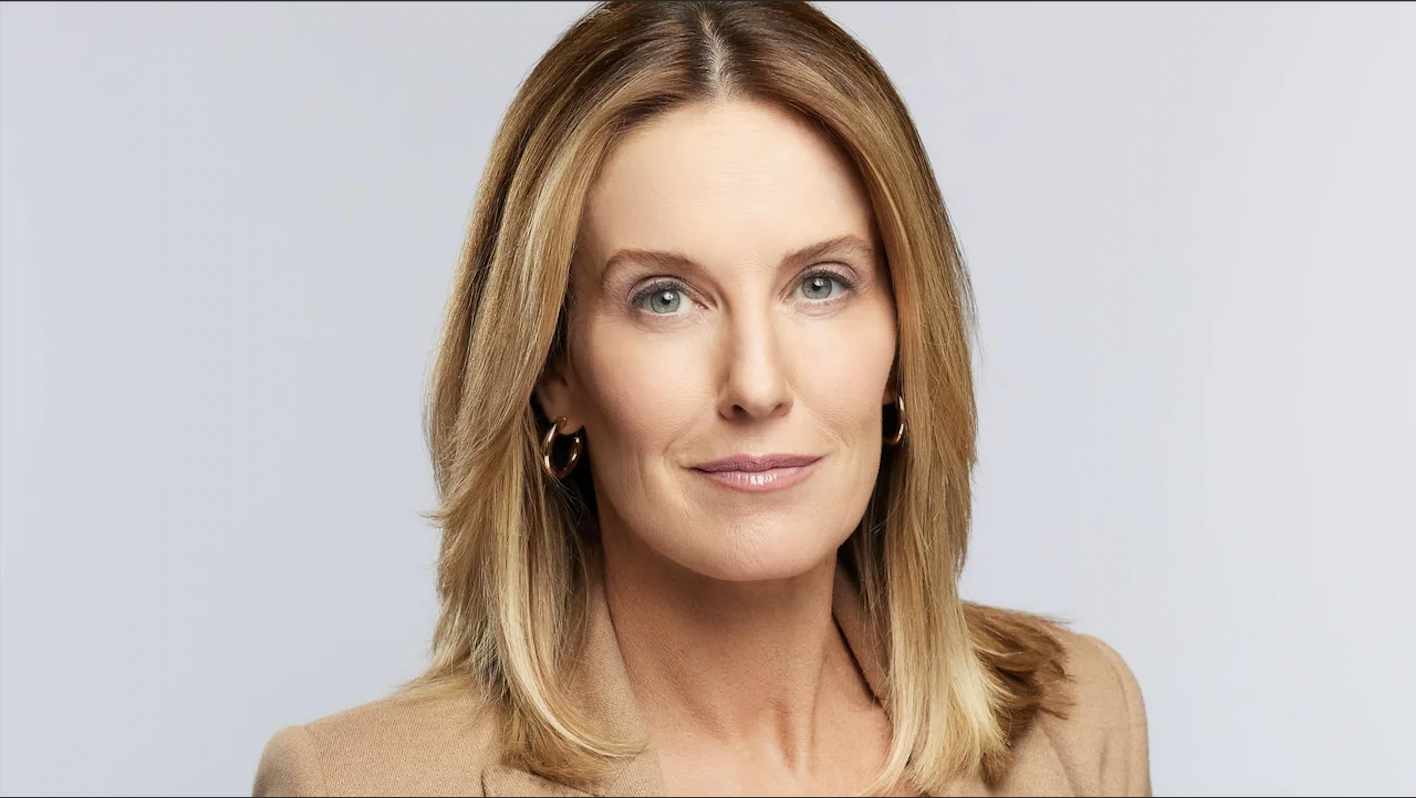
Sharyn Alfonsi called the decision to withhold the CECOT segment a “political” decision.
Alfonsi is a journalism and political science graduate of the University of Mississippi. She began with “60 Minutes” in 2015 and has developed national standing as an investigative reporter. She has won numerous awards including the Alfred I. duPont-Columbia Award and three Emmy Awards. Her CBS bio notes that she joined CBS after working in New York for ABC News. Among the major stories she has worked are the Jeffrey Epstein suicide and the Catholic Church scandal in Boston. In 2013, Alfonsi gave the commencement address at the then Meek School of Journalism and New Media at Ole Miss.
After the merger between Paramount and Skydance, David Ellison announced the purchase of The Free Press, a website started by Weiss in 2021, for $150 million. Weiss was named editor of CBS News despite having no experience in broadcast journalism. Before beginning The Free Press, Weiss resigned as an opinion writer at The New York Times and started a newsletter on Substack. The Times reported that The Free Press was a successful new journalism venture with 1.5 million subscribers and $15 million in annual revenue. The publication was known for its “anti-woke” material. The Free Press is still online and identifies itself as “a new media company built on the ideals that were once the bedrock of American journalism.”
In her own statement after withholding the CECOT piece, Weiss said: “My job is to make sure that all stories we publish are the best they can be. Holding stories that aren’t ready for whatever reason — that they lack sufficient context, say, or that they are missing critical voices — happens every day in every newsroom. I look forward to airing this important piece when it’s ready.”
There seemed to be some confusion as to whether the story was “spiked,” typically meaning that it was killed, or whether it might be aired in the future, as Weiss indicated in her statement. “Spike” is an old newsroom term. When an editor spiked a story, it was of course on paper and it meant the story was literally put on a metal spike on the desk. The next stop for that story was the trash can. In any case, because of the late decision by Weiss, the story was already available in Canada. A CNN report detailed how the stream was made available.
Even before the current controversy and before the merger of Paramount and Skydance was completed, “60 Minutes” executive producer Bill Owens resigned. In a widely reported memo to staff last April, Owens said that “over the past months, it has become clear that I would not be allowed to run the show as I have always run it, to make independent decisions based on what was right for ‘60 Minutes.’” In July of 2024, Skydance had launched the bid to acquire Paramount. By the time Owens resigned, Shari Redstone, controlling shareholder of Paramount, had stated publicly her desire to have the Trump lawsuit settled.
“60 Minutes” has for decades been the leader among network news magazines. What effect a decline in ratings might have is anyone’s guess. The network’s flagship CBS Evening News has been a ratings laggard behind NBC and ABC in recent years, with various experiments in format and anchors showing little positive result. Weiss named Tony Dokoupil to anchor the CBS Evening News beginning this week. He has been cohosting CBS Mornings and has a solid reputation as a reporter.
Donald Trump has successfully brought a new political dynamic and, at least for now, expanded powers to the presidency. He has done this despite historically low polling numbers. He has also brought change to the news business. CBS News operations are a relatively small part of the overall business picture of the combined Paramount Skydance, so low audience numbers may or may not be a factor. If CBS News becomes part of the Trump agenda, it will be hailed as a positive corrective by conservatives who for decades have believed mainstream media to have a liberal bias. It will be lamented by journalists and First Amendment supporters as the end of an extraordinary journalistic brand.
———————————————————————————-
Tony Pederson is managing fellow of the Overby Center for Southern Journalism and Politics and professor emeritus in journalism at Southern Methodist University in Dallas.
