
Felix Longoria and Three Rivers, Texas, helped launch Mexican American rights in 1949
Editor’s note: This is one in a series of essays by the Overby Center for Southern Journalism and Politics marking the 250th anniversary of the founding of the United States of America.
By Carlos Sanchez

About an hour’s drive south of San Antonio on Interstate 37 is a turnoff for U.S. Highway 281. Just a few miles away from this turnoff is the small town of Three Rivers, Texas, a community of about 1,500 residents that is generally known among local travelers as a traffic speed trap.
Three Rivers – named for its location near the confluence of the Atascosa, Frio and Nueces rivers – plays a major, yet mostly unknown role, in the civil rights movement of this country’s Mexican American community. It fits the pattern of so many communities throughout the 250-year history of the United States in which local events take on national significance.
Just as Selma and Birmingham are venerated for their place in African American civil rights history, Three Rivers represents hallowed grounds that helped launch a political movement among this nation’s Hispanic community as well as seeding a loyal electoral base for a future president whose civil rights credentials had always been suspect.
For a brief period of months, Three Rivers captured the world’s attention and proved the power of democracy once citizens choose to speak out. Some have said what happened in Three Rivers marked the moment when Mexicans in this country became Mexican Americans.
The catalyst involved a young, decorated soldier named Felix Longoria who was killed in action in the Philippines just three months before World War II officially ended in 1945.
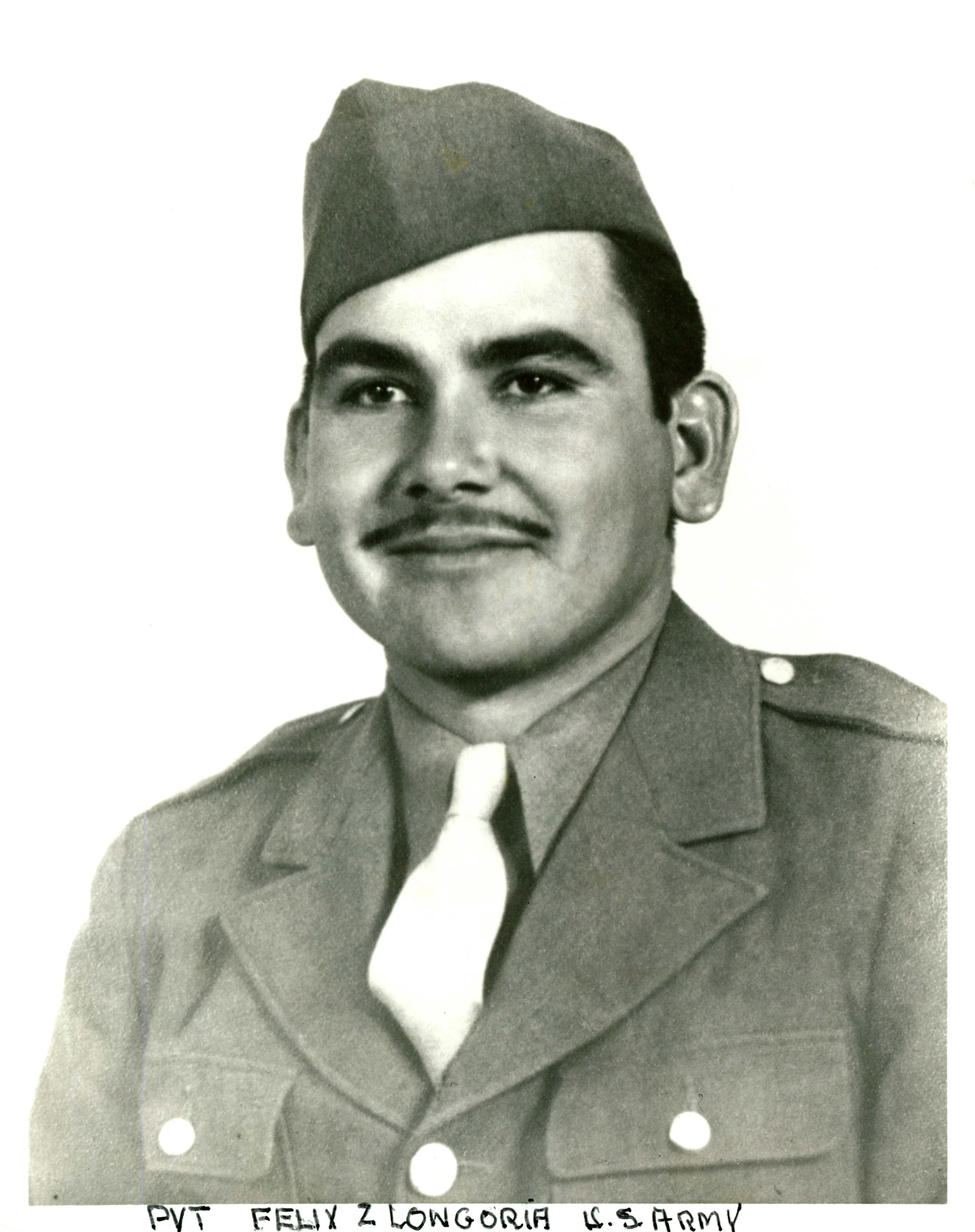
Pvt. Felix Longoria was killed in action in the Philippines in 1945. Photo from Dr. Hector P. Garcia Papers, Collection 5, Box 2. Special Collections and Archives, Mary and Jeff Bell Library, Texas A&M University-Corpus Christi.
Longoria grew up in Three Rivers as part of a well-respected family who bridged a community that abided by a centuries-old tradition of segregation between Anglos and Mexican Americans. The family patriarch, Guadalupe Longoria, was a fence builder by trade, but served as a trusted conduit between Anglos who needed Mexican labor and Hispanics who needed jobs.
One of the most prominent jobs of the Longoria family was building a fence dividing the local cemetery into the final resting grounds for whites on one side and Hispanics on the other.
Felix joined the U.S. Army in late 1944 and was sent to the island of Luzon in mid-1945. Within weeks of his arrival, he was part of a patrol that was ambushed by a Japanese machine gun nest, and he was killed along with several other soldiers. It took four years for the Army to recover and identify the remains of Felix, and in 1949, his wife, Beatrice, was alerted that he was coming home and she should arrange for his burial.
The widow had since moved to Corpus Christi, about two hours away from Three Rivers, but she dutifully returned to the small town where she and Felix had met to make funeral arrangements with Three Rivers’ sole funeral home. She met with the funeral director, Tom Kennedy, whom she later described as respectful and empathetic.
But when Beatrice asked that the wake for her husband be held in the funeral home, he declined, saying, “The whites would not like it.” Twice she traveled to Three Rivers and twice he declined use of his chapel for her husband’s wake. Frustrated and contending with the re-opening of the wounds of the loss of her husband after four years, she complained to her sister upon returning to Corpus Christi following her second visit. His sister, Sara, immediately reached out to a local physician who had begun actively helping Hispanic soldiers negotiate government bureaucracy as they readjusted to postwar life.
The doctor’s name was Hector P. Garcia, and the organization he founded to help veterans was called the American G.I. Forum.
While navigating the bureaucracy, Garcia also witnessed ongoing discrimination that was a mainstay in Texas and the South. He himself had attended a segregated high school and was the sole Mexican American who was annually allowed to attend medical school in Texas.
But he also had keen political instincts, and when he heard about Longoria, he moved quickly to dispatch telegrams to state and federal elected officials as well as the media informing them what was happening. He called a local newspaper reporter in Corpus Christi and asked the reporter to call the funeral home in Three Rivers to verify the story. He also called the funeral director directly and spoke to him while having an office secretary listen to the conversation on a separate phone line.
Kennedy, the funeral director, repeated his concern to the reporter, to Garcia and Garcia’s secretary, as well as to a state official who also received a telegram from Garcia: The whites would not like it if he allowed his chapel to be used for Longoria’s wake, he said. With Beatrice, that made five people to whom Kennedy repeated the story. It was a salient point because Kennedy would later change his story.
Among those receiving a Garcia telegram was the new senator from Texas who had taken office just weeks earlier after a contentious election, Lyndon Baines Johnson. As a member of the House of Representatives, Johnson was already viewed with suspicion by the conservative white political leadership in Texas because his House votes lent strong support to President Franklin Roosevelt’s liberal agenda.
For Johnson to jump into the middle of an ethnic fray just weeks into his rookie term as senator was a huge gamble. Particularly if it was being made on behalf of a Mexican American whose people had little political influence and even less of a voting record given the existence of a $1.75 poll tax, an amount that represented half a day’s wages for the average Mexican laborer.
But Johnson, whose first job out of college was teaching Mexican children in a South Texas town near Three Rivers, demonstrated a little-known affinity for Hispanics. And his masterful political instincts also saw that postwar America would be more outraged by the treatment of a soldier who died for his country than for a Hispanic suffering discrimination.
The day after receiving a telegram from Garcia, Johnson responded in kind: "I deeply regret to learn that the prejudice of some individuals extends even beyond this life,” Johnson wrote. “This injustice... is deplorable. I have today made arrangements to have Felix Longoria reburied with full military honors in Arlington National Cemetery here at Washington where the honored dead of our nation's wars rest."
The reaction was immediate and intense. It was front page news around the world. Walter Winchell, one of the most prominent syndicated newspaper columnists in the country who also had a national radio audience, summarized it best: “The big state of Texas looks mighty small tonight,” he said.
While Hispanics in Texas viewed it as yet another example of prejudice in which they contended with daily, postwar America outside of Texas simply viewed it as an unpatriotic act desecrating a war hero at a time when virtually everyone in the country had been touched by a soldier’s death. It portended a new policy-making dilemma for our country: deriving different truths from the same set of facts.
Mexico, which had provided labor to the United States during the war through something called the Bracero Program, was in the midst of negotiating a treaty extension, and held the funeral home’s action as a key reason not to include Texas in an extended program.
Mexicans Americans throughout the country sent telegrams – the day’s version of email – to the Longoria family and Dr. Garcia expressing support. And the white power structure in Three Rivers, abetted by the state’s white elected officials, driven by international embarrassment, played defense and declared it a misunderstanding.
The funeral director said he was trying to prevent aggravating a family rift between Beatrice and Longoria’s family who were bothered by the fact that she was seeing another man. But evidence suggested the funeral home didn’t know about the tension at the time she was seeking to use the funeral home.
Still, with Texas leaders pressuring, the Three Rivers funeral home altered its position and said Longoria could use its facilities, and state leaders stepped up and tried to pressure the Longoria family to use a veterans cemetery in San Antonio if they didn’t want to go to Three Rivers – anything to keep Longoria in Texas and mitigate the embarrassment.
Again, Dr. Garcia, acting at the request of Beatrice, a shy woman who was unfamiliar with the cutthroat politics of Texas and certainly unfamiliar with international attention, outwitted the Texas power structure by calling a town meeting in Corpus. With Beatrice’s permission, he asked a packed hall of Hispanics who came to express support to vote on where to send the soldier’s body.
Arlington Cemetery, across the Potomac from Washington, D.C., was the clear favorite and was conveyed to a rapt nation that this venue was the people’s choice.
Pvt. Felix Longoria was buried in Section 34 of Arlington National Cemetery on Feb. 16, 1949. Along with a military honor guard, Sen. Johnson and members of his staff attended, as did a representative of the White House and the State Department, which was hopeful that this burial would alleviate some of Mexico’s concerns about Texas prejudice and allow the Bracero Program to continue.
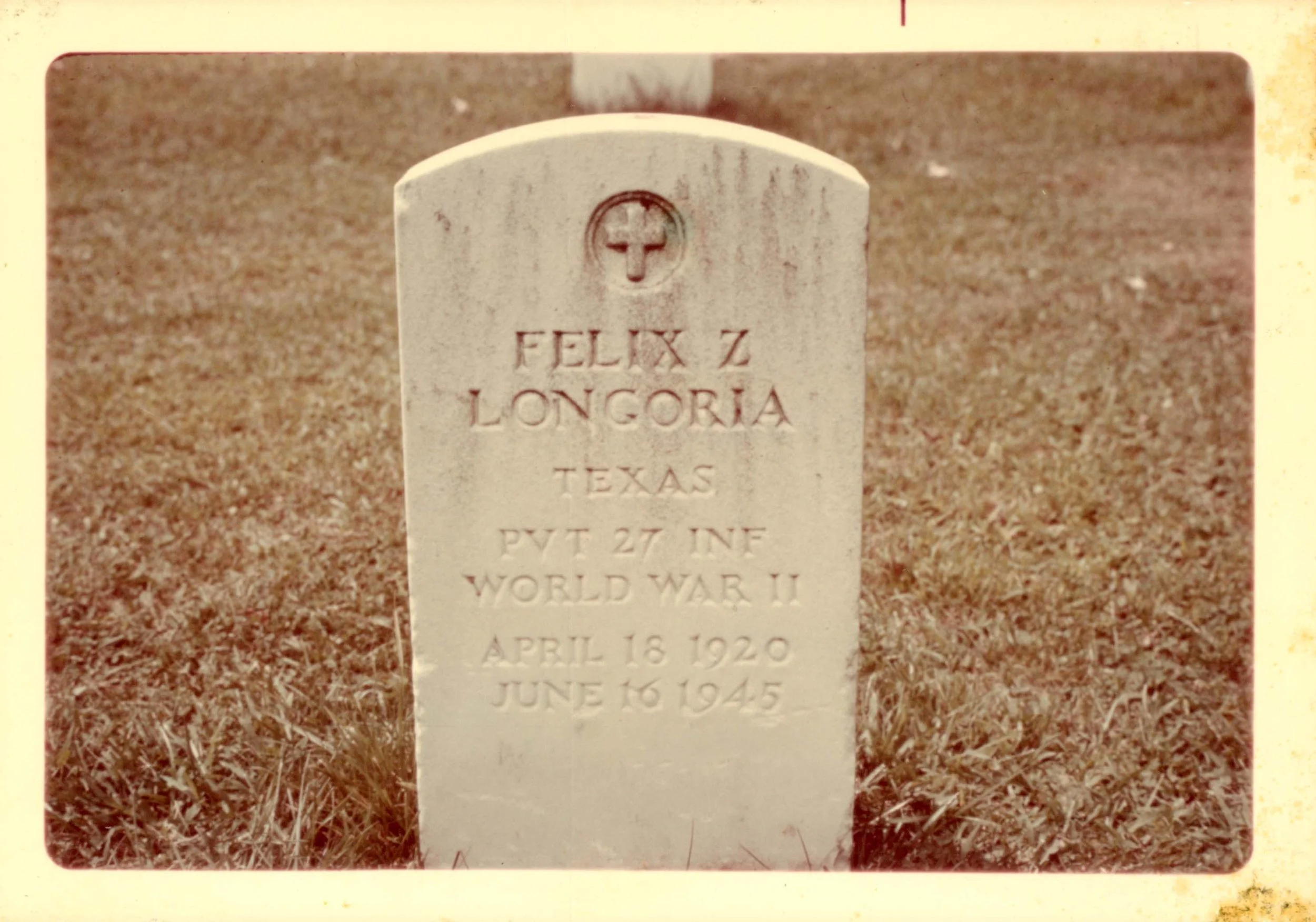
After the controversy known as The Longoria Affair embarrassed Texas, the fallen soldier was laid to rest in Arlington National Cemetery. Photo from Dr. Hector P. Garcia Papers, Collection 5, Box 2. Special Collections and Archives, Mary and Jeff Bell Library, Texas A&M University-Corpus Christi.
At Johnson’s insistence, all political representatives, including himself, were relegated to areas behind the Longoria family so that it did not become a photo opportunity.
Meanwhile, the Texas Legislature convened a special legislative subcommittee to investigate what became known as “The Longoria Affair,” and within months, to no one’s surprise, issued a report with a single dissent that concluded that the Three Rivers funeral home was the true victim – of miscommunication, of outside influences intent on embarrassing Texas and the tiny town. There was no evidence of prejudice against Mexicans or Mexican Americans in this case.
But the true vote on this event came from donations that came pouring in from across America to help pay for the family’s expenses as they flew to Washington for the funeral. At a time when Texas farm wages were between 25 cents and 50 cents an hour, people like Mathis R. Treviño sent in $1.00; Luis Overa 25 cents; Mike Solís 50 cents; and D.F.S. Ewing $5.00. The Corpus Christi American G.I. Forum chapter contributed $50.00.
The donations were borne of sympathy for yet another of our nation’s families who were mourning the loss of a soldier in this terrible war. But they were also borne of defiance, of expressions of support for a very public victory of a Mexican American from Texas.
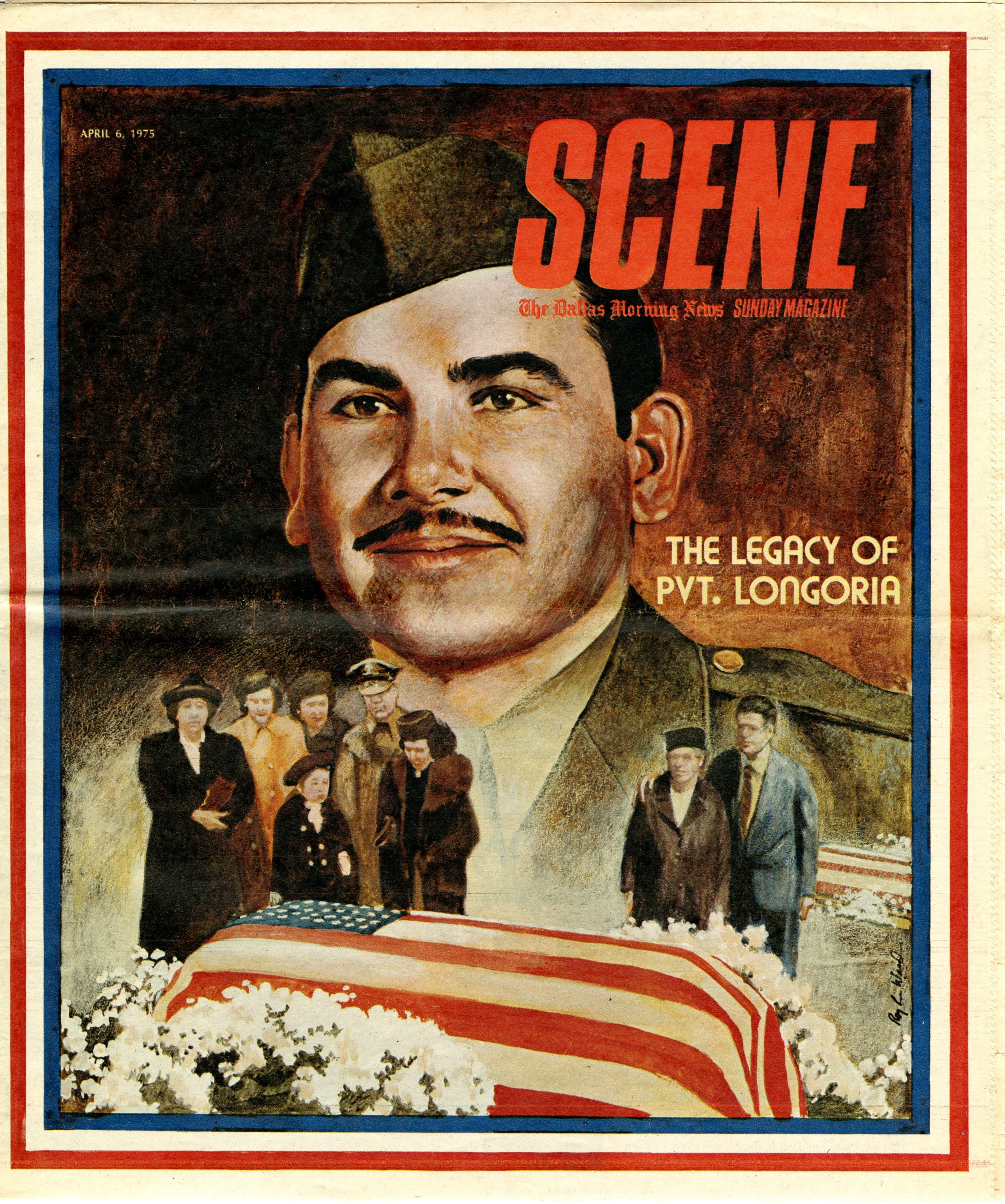
The Dallas Morning News honored Felix Longoria’s legacy in a 1975 feature. Photo from Dr. Hector P. Garcia Papers, Collection 5, Box 2. Special Collections and Archives, Mary and Jeff Bell Library, Texas A&M University-Corpus Christi.
One J.O. Garcia summed up the sentiment in a handwritten note, according to a book titled “Felix Longoria’s Wake: Bereavement, Racism, and the Rise of Mexican American Activism.” “Today I have the very cordial honor of sending this contribution in order to make me a participant in the cause of Longoria’s widow to give her my vote of condolence in the death of her beloved spouse that gave his life for the good of the country,” the note read. “Well I wish that they would give her the most satisfactory funeral services for the entire family instead of letting her go on suffering such terrible disgrace.”
—————————————————————————-
Carlos Sanchez is a freelance writer based in McAllen, Texas. He is a member of the Overby Center panel of experts.
—————————————————————————-
Of note: Texas A&M University-Corpus Christi Special Collections & Archives is accepting applications for the Dr. Hector P. Garcia Fellowship. This fellowship is an opportunity for researchers to engage with the Dr. Hector Garcia Papers. Application deadline is Aug. 31. Awards of $1,000 each will be made to three separate applicants. Visit the library website for complete details.